
Salt Air Proof Your Mic: Coastal Recording Maintenance
By Jakob Steiner • 8th Jan

If you're recording audio near the ocean, you need to prioritize coastal microphone maintenance. That salt air isn't just a taste on your lips (it is literally corroding your most critical component: your microphone's internal circuitry). Audio gear in salty air requires a different approach than standard humidity concerns, and most manufacturers won't tell you how urgently this issue demands attention. Forget the marketing fluff about "water-resistant" claims that apply only to brief splashes, not chronic salt exposure. Your microphone's diaphragm tension, electrical contacts, and preamp components are degrading silently while you chase perfect vocal tone.
Why Salt Air Is a Silent Killer for Audio Gear
Humidity alone creates condensation issues, but salt air is an entirely different beast. For a deeper look at moisture-related issues and prevention, see our guide on humidity and microphones. That misty ocean breeze carries microscopic salt particles that infiltrate microphone ports, settle on circuit boards, and corrode delicate connections, all while you're oblivious to the damage. Unlike pure water exposure that might cause immediate failure, salt corrosion works insidiously, creating subtle treble loss and intermittent crackles that mimic "room problems" or "cheap gear" issues.
Review the search data and industry reports: salt-laden air accelerates corrosion 10x faster than freshwater exposure on identical components. Yes, an IP67 rating helps (fully dust-tight and waterproof to 1 meter), but it's no guarantee against salt's long-term insidious creep. What matters isn't the brief splash resistance, it is the continuous exposure to airborne salt that eats away at contacts and changes the acoustic properties of your transducer.
I learned this the hard way during a national client's beachfront podcast setup. They blamed "muddy" audio on their $1,200 condenser mics when the real culprit was salt corrosion on preamp inputs and reduced off-axis rejection from compromised mic capsules. The fix wasn't gear replacement; it was proper coastal maintenance protocols plus strategic gobo placement to control the reflective environment.
Recognizing Salt Damage Before It's Fatal
Don't wait for complete failure. Salt corrosion manifests as:
- Noticeable high-frequency loss (that "dulled" sound you blame on your room)
- Intermittent signal dropouts (especially when moving cables)
- Increased self-noise floor even at low gain settings
- Erratic proximity effect behavior
- Reduced off-axis rejection capabilities
Most creators misdiagnose these as "room issues" or "bad gain staging." They crank preamp headroom to compensate for lost signal integrity, which only amplifies the noise floor and creates more post-production headaches. Remember my core principle: clean capture beats corrective processing. Choose transducers that create fixable, not fatal, problems.
Your Daily Coastal Maintenance Protocol
Minimum viable chain, maximum focus
For coastal recording environments, your daily routine must include:
Nightly Decontamination
- Wipe all exposed metal surfaces with a microfiber cloth treated with isopropyl alcohol (90%+) (not just the body, but every connector and port)
- Remove batteries immediately after use (salt accelerates battery terminal corrosion)
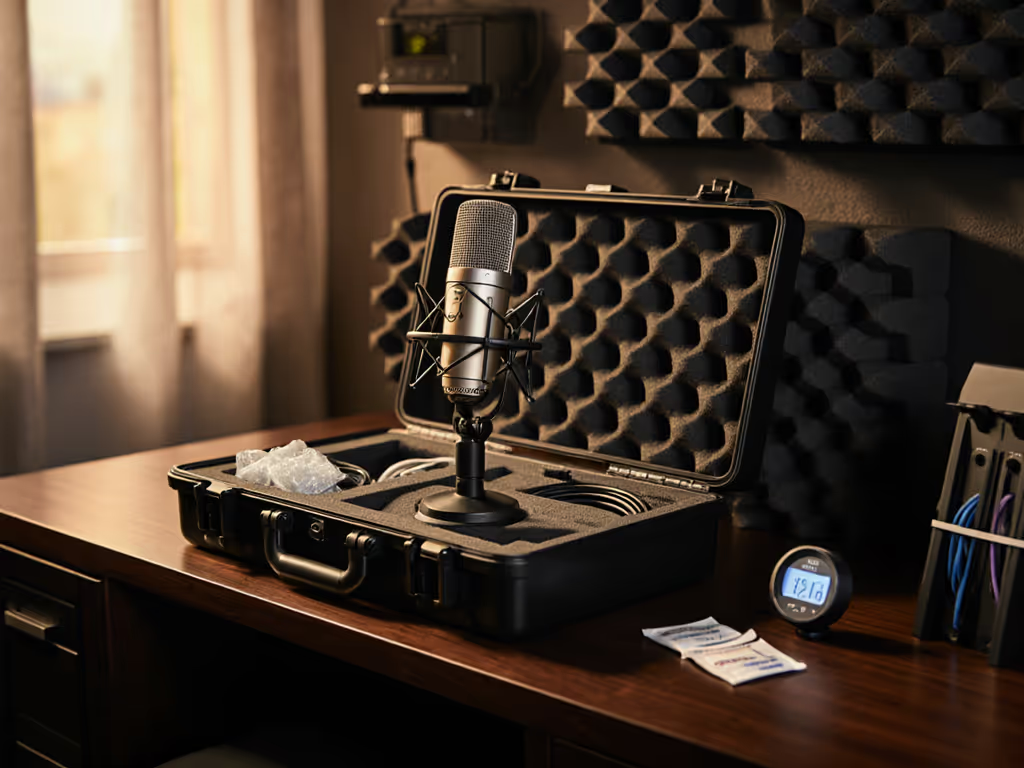
- Store in airtight container with silica gel packs rated for high-moisture environments (not the little packets that come with new gear)
Pre-Recording Checks
- Inspect microphone grilles for salt crystallization: use a soft brush to remove particles before they penetrate deeper
- Check for intermittent connections by gently wiggling connectors while monitoring audio
- Verify consistent gain structure at your normal operating level (salt damage often creates variable resistance)
Most "waterproof" claims are marketing theater. That IP67 rating means nothing when salt has compromised contact points inside supposedly sealed units. Real coastal maintenance requires vigilance, not just buying "rugged" gear.
Long-Term Preservation Strategies
Deep Cleaning Monthly
For dynamic mics: Remove the grille and use a soft brush with contact cleaner on the internal components. For condensers (handle with extreme care): Focus only on external contacts, never attempt internal cleaning unless you have proper training.
Strategic Gear Rotation
Maintain two identical microphone chains: one for critical coastal recordings (used sparingly), another for regular use. This extends the life of your primary coastal rig while maintaining consistent audio quality. Yes, this initially seems expensive, but compare it to the cost of replacing corroded equipment every 18 months.
Proper Storage is Non-Negotiable
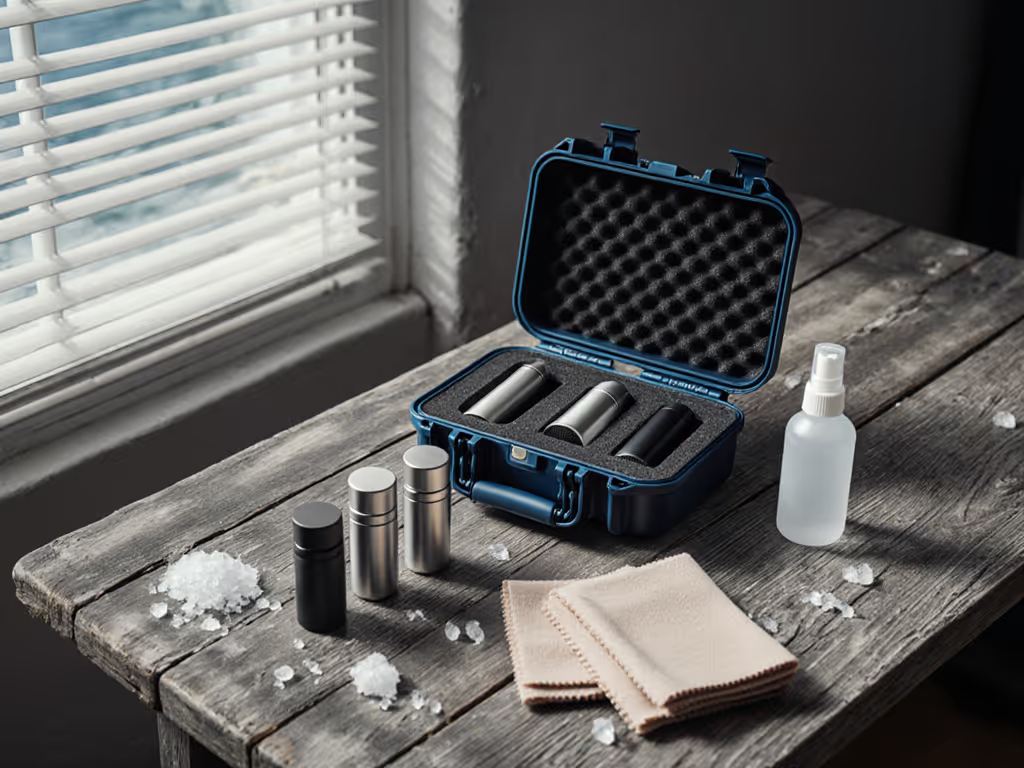
Coastal storage isn't just about dry boxes. Use desiccant canisters that actively pull moisture from the air, not just passive silica packets. Store mics vertically to prevent any accumulated moisture from pooling near sensitive components.
Coastal Gear Selection: Cutting Through the Hype
When choosing equipment for seaside environments, ignore the "waterproof" marketing. Focus instead on:
- Simple construction (fewer seams = fewer corrosion points)
- Replaceable components (grilles, cables, connectors)
- Metal construction (avoid plastic housings that trap moisture)
That Shure SM7B you love for its smooth presence region? Its all-metal construction actually makes it more suitable for coastal use than "premium" mics with complex plastic housings that trap salt-laden moisture. Meanwhile, many "professional" condenser mics with delicate internal components simply don't belong in high-salt environments without aggressive maintenance protocols.
Dynamic mics generally outperform condensers in coastal environments, not because of sound quality, but because they have fewer delicate internal components vulnerable to salt damage. The tradeoff is needing more clean gain, which brings us back to proper preamp headroom management. You can't compensate for poor maintenance with better preamps, but you can extend your gear's lifespan with proper chain discipline.
The Reality Check on "Corrosion-Proof" Gear
Here's where I get properly skeptical: no manufacturer will tell you this, but all electronics eventually succumb to salt damage in coastal environments. The question isn't "if" but "when."
Those "marine-rated" audio devices? They're simply built with better corrosion-resistant materials that delay the inevitable. They still require rigorous maintenance. The only true coastal recording strategy combines proper maintenance protocols with realistic expectations about gear lifespan.
I've seen creators spend thousands on "rugged" gear only to neglect basic maintenance, then wonder why their audio quality deteriorates. Your maintenance routine matters more than the price tag on your microphone. Remember the law of diminishing returns: beyond a certain point, better gear won't compensate for poor coastal maintenance habits.
Your Maintenance Checklist for Coastal Recording Days
- Wipe all exposed metal with isopropyl alcohol before AND after recording
- Store in airtight container with active desiccant, not passive silica
- Never leave batteries in equipment after use
- Perform monthly deep cleaning (dynamics only, condensers require professionals)
- Rotate between two identical setups for critical recordings
- Verify consistent gain structure before each session
- Monitor for subtle high-frequency loss (early sign of corrosion)
Maintenance isn't just about preserving gear, it's about preserving your audio quality. Every decibel of noise floor you prevent through proper coastal microphone care is one less decibel of corrective processing needed later. This directly impacts your sponsor-read polish and overall production quality.
Remember my mantra: Capture clean, commit early, and keep sponsors breathing between words. Your coastal maintenance routine isn't optional, it is the foundation of broadcast-quality audio in challenging environments.
Protect your investment with the discipline it deserves. For long-term planning, see our microphone lifespan guide. Your audience (and your sponsors) will hear the difference immediately.
Minimum viable chain, maximum focus
Related Articles