Extend Microphone Lifespan: Preserve Your Podcast Investment
By Luis Cabrera • 22nd Oct
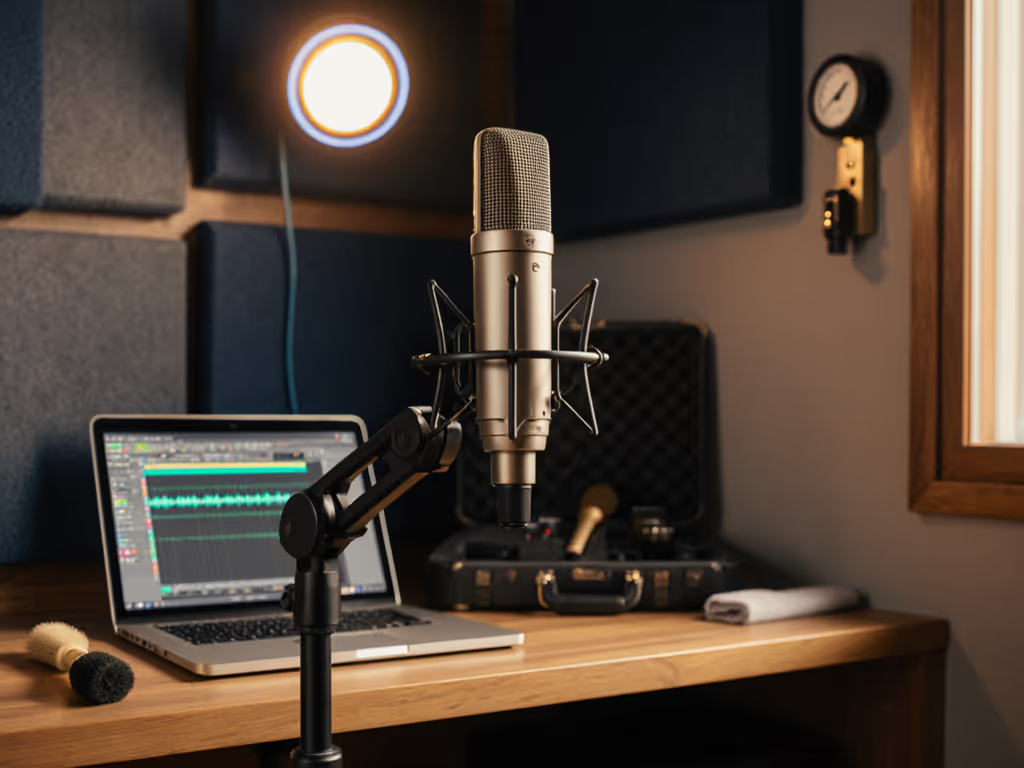
Your microphone lifespan directly impacts your podcast's sound quality and budget. As podcasters recording in bedrooms, home offices, or shared spaces, we face real challenges: dust infiltration, accidental bumps, and environmental wear that degrade our gear. With professional podcast mics representing significant investments, preserving their longevity isn't a luxury, it's a necessity. Through consistent care and strategic habits, you can extend your equipment's prime years dramatically, avoiding premature replacements and maintaining studio-quality audio throughout your microphone's natural degradation timeline.
Understand Microphone Degradation Factors
Microphones don't expire on a schedule, their decline hinges on usage patterns and environmental stress. Key factors accelerating wear include: To reduce p-pops and harsh sibilance that wear on capsules, follow our mic positioning guide.
Daily handling: Frequent setup/teardown strains connectors and internal components. Environmental exposure: Dust accumulation muffles high-end clarity over time, while humidity corrodes internal circuits. Physical stress: Drops or impacts misalign delicate capsules, while plosives (p-pops) gradually degrade diaphragms. Vocal exposure: Saliva particles from close-miking eventually contaminate grilles and dampening materials.
Recognizing these early helps tailor your preservation strategy.
Implement Routine Maintenance Protocols
Structured care prevents 80% of premature failures. Follow this timeline: For step-by-step cleaning and maintenance checklists, see our pro microphone care guide.
Daily:
- Wipe exteriors with a dry microfiber cloth after sessions
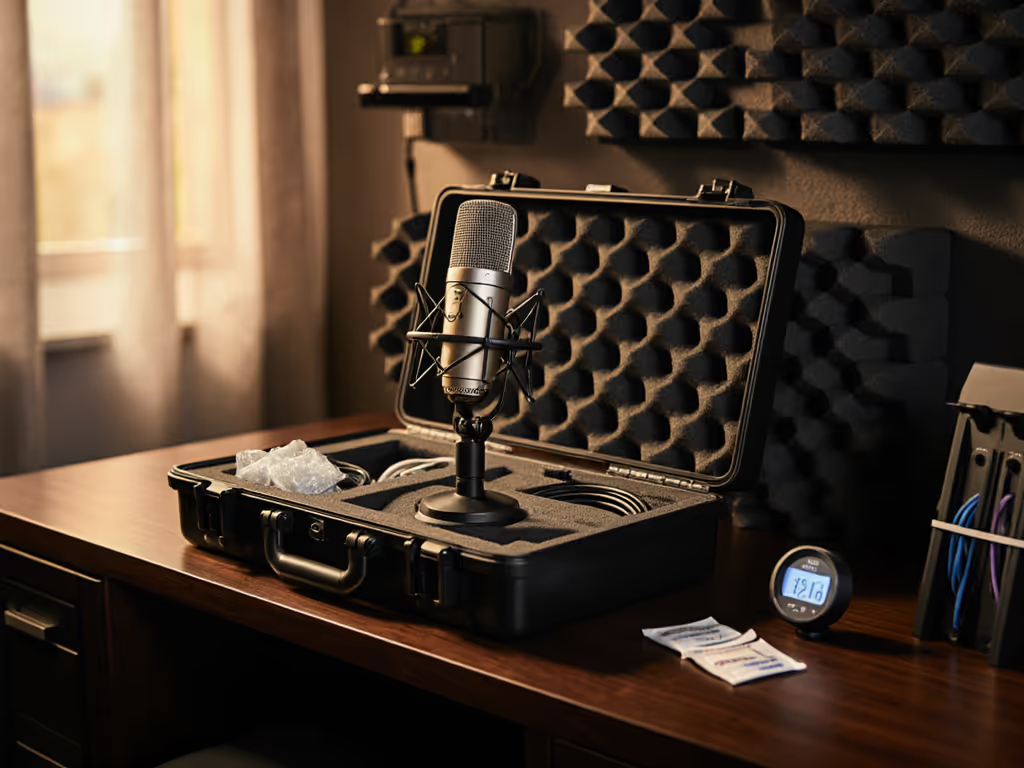
- Store in a padded case or under a dust cover when idle
- Verify pop filters aren't touching grilles (prevents moisture transfer)
Weekly:
- Inspect cables for kinks stressing XLR/USB connectors
- Clean grilles with a soft brush (angled bristles remove particles without pressing inward)
Monthly:
- Deep-clean grilles: Remove and soak in warm water + mild soap for 10 minutes. Air-dry completely before reattaching.
- Test shock mounts: Ensure isolation bands aren't cracking or hardening
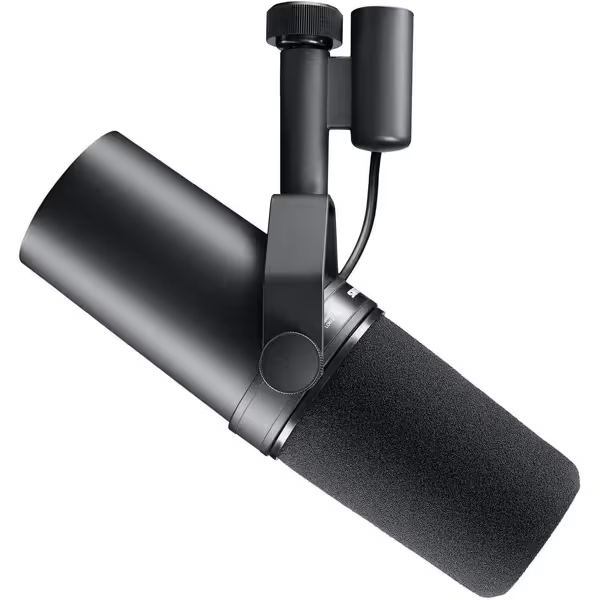
Shure SM7B Microphone
Achieve broadcast-quality vocals with superior noise rejection, even in untreated rooms.
$439
ConnectivityXLR
ConnectivityXLR
Pros
Broadcast-quality sound; warm, natural speech reproduction.
Exceptional rejection of room noise, hum, and plosives.
Rugged build for long-lasting, reliable performance.
Cons
Requires significant gain; may need an inline preamp.
Customers find this microphone to be a solid mid-grade option that delivers crystal clear sound with added richness in the bass and handles different vocal ranges exceptionally well. They appreciate its build quality, with one customer noting its all-metal construction, and consider it well worth the money. The functionality and noise level receive mixed feedback - while some say it works great, others report it doesn't work at all, and while some find it very forgiving of background noise, others mention a loud hiss with the preamp activated. The gain level also gets mixed reviews, with some finding it sufficient while others say it needs quite a boost.
Customers find this microphone to be a solid mid-grade option that delivers crystal clear sound with added richness in the bass and handles different vocal ranges exceptionally well. They appreciate its build quality, with one customer noting its all-metal construction, and consider it well worth the money. The functionality and noise level receive mixed feedback - while some say it works great, others report it doesn't work at all, and while some find it very forgiving of background noise, others mention a loud hiss with the preamp activated. The gain level also gets mixed reviews, with some finding it sufficient while others say it needs quite a boost.
The SM7B's detachable windscreen simplifies cleaning - essential for frequent use.
Optimize Storage and Handling
Improper storage silently sabotages gear. Implement these safeguards:
- Humidity control: Keep silica gel packets in storage cases to prevent internal corrosion
- Cable management: Loop cords in wide circles (not tight coils) to prevent internal wire fractures
- Mounting stability: Use robust arms like the OC White Ultima to minimize desk vibrations transferring to capsules
- Travel protocols: Always detach mics from stands during transport; use hard-shell cases Round out your setup with podcast mic accessories that fix real recording problems.
Recognize Degradation Signs
Catching early audio quality decline indicators saves costly replacements:
- Hiss/unusual noise: Not always interface-related, can indicate failing internal components
- Dull high frequencies: Dust accumulation on diaphragms muffles clarity
- Intermittent cutouts: Often loose solder points in connectors after repeated plug/unplug cycles
- Handling noise transmission: Worn shock mount isolation failing to absorb vibrations
When these persist despite cleaning, consider professional servicing before full failure. Before you replace anything, run through our podcast mic troubleshooting checklist.
Strategic Upgrade Planning
Despite best efforts, equipment refresh cycles remain inevitable. Maximize value through:
Reusable infrastructure: Invest in components that outlive multiple mic upgrades:
- Heavy-duty boom arms (e.g., Elgato Wave LP)
- Quality XLR cables (like Pig Hog) with strain relief
- Interface compatibility across future mics
Staged transitions: When moving from USB to XLR:
- Start with flexible models like Rode NT1 (USB/XLR hybrid)
- Later shift to dedicated XLR mics while reusing existing interfaces/accessories Compare the best USB/XLR hybrid microphones to future-proof your upgrade path.
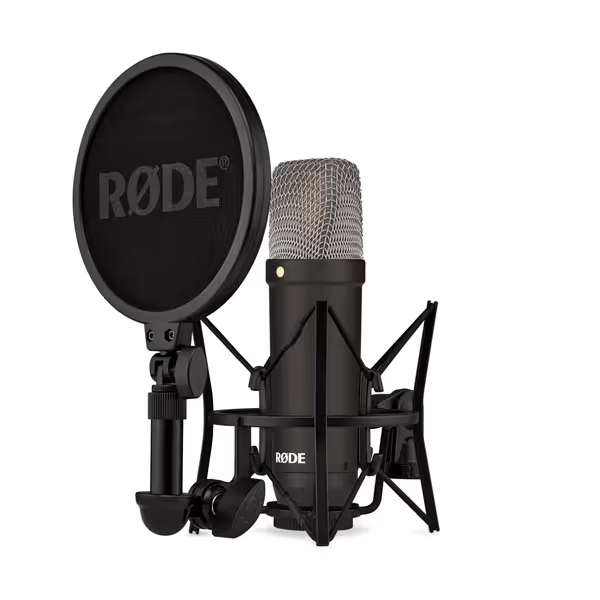
RØDE NT1 Signature Series Condenser Microphone
Achieve professional-grade audio with pristine clarity and natural vocal reproduction.
$159
Self-Noise4dBA (Extremely Low)
Self-Noise4dBA (Extremely Low)
Pros
Broadcast-ready sound with exceptional vocal clarity.
Comes with studio-grade shock mount, pop filter, and XLR cable.
Durable, premium build quality backed by a 10-year warranty.
Cons
Condenser design may pick up more room ambiance.
Customers find this microphone to be professional-grade with beautiful sound quality that makes voices sound natural, and appreciate its value for money. The microphone works well and is easy to set up...
Customers find this microphone to be professional-grade with beautiful sound quality that makes voices sound natural, and appreciate its value for money. The microphone works well and is easy to set up...
The NT1's shock mount and pop filter bundle preserves investments across upgrades.
When to Replace vs. Repair
Assess cost-benefit at critical degradation points:
| Action | When Warranted | Cost Estimate |
|---|---|---|
| Capsule cleaning | Muffled highs + visible debris | $20-$50 |
| Cable repair | Intermittent audio/damaged connectors | $15-$30 |
| Full replacement | Electronic failure or capsule damage | $100-$400+ |
Note: Condenser mics often cost more to repair than dynamics like the SM7B due to complex circuitry.
Spend once where it compounds: Durable accessories (shock mounts, quality arms) protect multiple mics across years.
Realistic Lifespan Expectations
With disciplined care:
- Dynamic mics (e.g., Shure SM7B): Often exceed 10+ years in daily use
- Condensers (e.g., AT2020): Typically 5-8 years before noticeable high-frequency damping
- USB mics: Shorter life (3-5 years) due to integrated electronics
Monitor microphone degradation signs quarterly. If raw files increasingly require noise reduction/de-essing despite proper technique, your mic may be entering the decline phase.
Your next step: Today, implement just one protocol (whether dust covers, scheduled cleaning, or cable checks). Small consistent actions compound into years of pristine audio and protected investments. Remember: A $400 mic lasting eight years costs just $0.14 per podcast episode. Preserve wisely.
Related Articles