Best Podcast Microphones for Beards: Placement & Proximity
By Jakob Steiner • 12th Apr
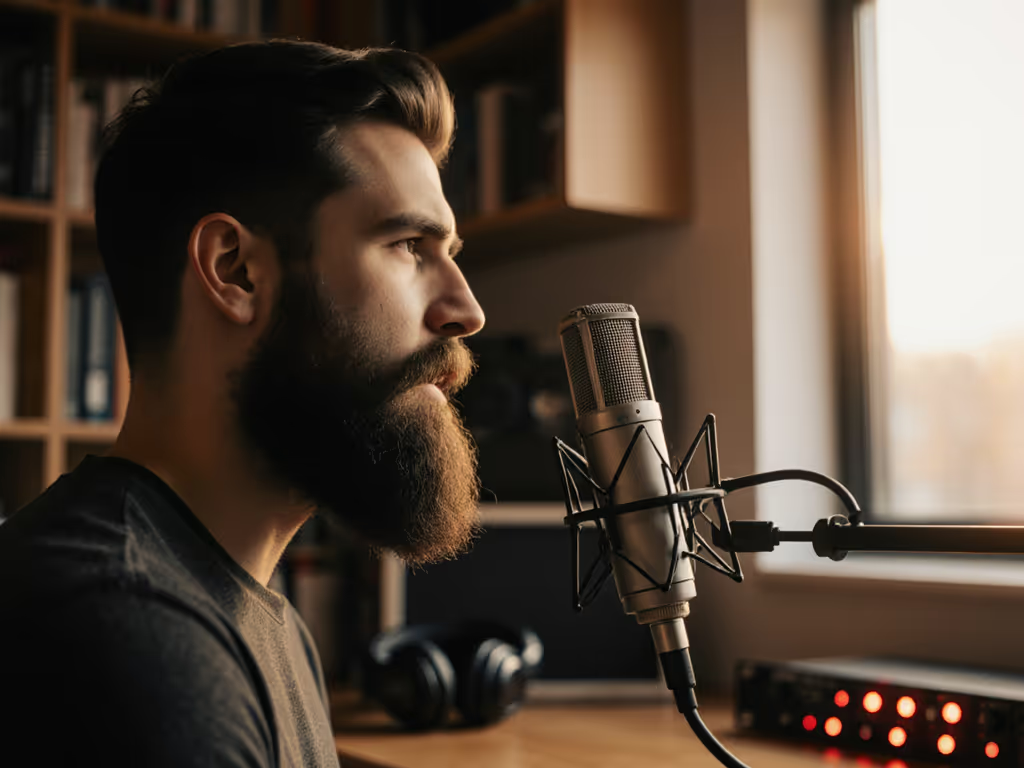
Facial hair fundamentally changes how a microphone captures your voice. A full beard shifts your proximity effect, redirects plosives, and alters how the mic's polar pattern interacts with your presence region, yet most gear reviews ignore this entirely. Finding the best podcast microphone for facial hair placement requires rethinking where you mount the transducer and how you manage the acoustic space between your mouth and diaphragm. The challenge isn't the mic itself; it's fixing your setup chain and understanding how beards amplify both the solutions and the mistakes.
The Beard Proximity Problem
Proximity effect, the bass boost that occurs when a voice sits close to a directional microphone, becomes more pronounced when facial hair is in play. A dense beard acts as a partial acoustic filter, absorbing high-frequency detail and reducing some direct sound energy. To compensate, many beard-wearing podcasters unconsciously move closer to the mic, which deepens the proximity boost and makes editing harder: you get boomy, dark tone that no amount of post-processing cleanly reverses.
The fix isn't a new microphone. The fix is disciplined placement. Instead of moving in and out as you talk, establish a fixed distance (typically 2-3 inches for dynamic mics with supercardioid patterns) and keep your beard's front surface at a consistent angle. This creates predictable, fixable problems: a little extra bass around 200 Hz and tighter off-axis rejection due to the beard's acoustic mass. Both are manageable with proper gain staging and mic choice.
How Facial Hair Affects Plosive Control and Articulation
Beards don't stop plosives; they scatter them. A plosive spike from a hard p or b will hit your beard hairs, diffuse slightly, and still arrive at the diaphragm, but now with interference patterns. A standard pop filter helps, yet the real control comes from mic angle and mouth positioning.
Tilt your mic slightly upward (10-15 degrees) so the capsule sits above your lip line rather than directly inline with your mouth. This positioning (call it the "slight high-angle rule") allows air bursts to pass above the sensitive zone while your vocal cords project into the pattern's sweet spot. If you wear a full beard, this angle is more forgiving than it is for clean-shaven speakers because the beard itself breaks up direct wind.
Vocal clarity with facial hair also depends on microphone choice. Dynamic mics with pronounced presence peaks (like the Shure SM7B or Electro-Voice RE20) can brighten a naturally darker tone, but they demand cleaner gain structure to avoid pushing harshness into the presence region. Cardioid and supercardioid patterns give you tighter off-axis rejection, which means less room wash leaking into your vocal layer, critical when you're working in an untreated bedroom or shared office.
Placement Strategies for Beard Wearers
The Fixed Mounting Principle
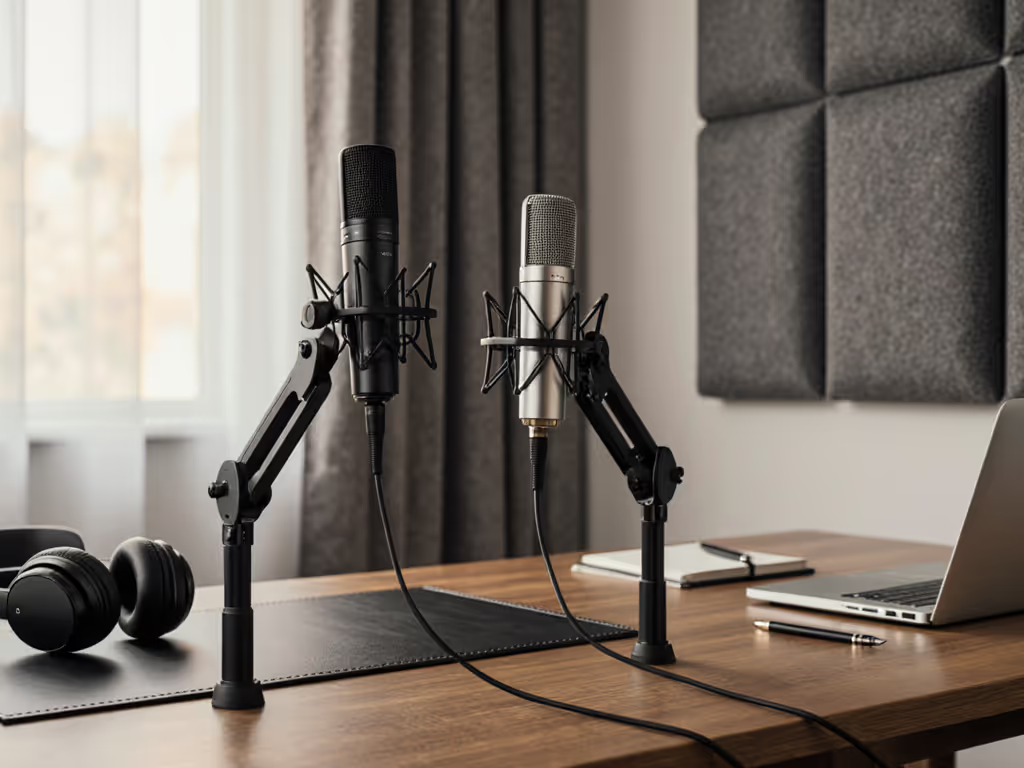
Beard wearers benefit most from a shock-mounted mic on a rigid arm rather than handheld setups. A handheld mic migrates closer and farther as you gesture and talk, and that distance shift (even 0.5 inches) changes the proximity effect and polar pattern interaction with the room. A properly isolated arm keeps the capsule locked in position.
When mounting, aim for these positions:
- Supercardioid dynamic (e.g., Rode PodMic, Sennheiser MD 441-U): Capsule at mouth level or slightly above, 2-3 inches away, tilted 10-15 degrees upward.
- Cardioid condenser (rarer for podcasting but used for high-fidelity interviews): 4-6 inches away, slight downward tilt to reduce breath noise, with a windscreen.
- USB hybrid (Shure MV7+, ATR2100x-USB): Treat like a dynamic - 2-3 inches, angled, consistent distance.
Gain Staging and Preamp Headroom
Once your mic is mounted, your next control is gain. Too little gain and you're forcing your interface's preamp into a noisy zone; too much and you clip. With a beard, aim for -6 to -3 dB of headroom on peaks, your loudest sponsor read or laugh. For step-by-step level setting, follow our podcast mic gain staging guide. This reserves clean gain margin and ensures your waveform never touches the digital ceiling.
If your interface's preamp noise floor is too high (typically anything under 100 dB EIN), consider an inline preamp like a Cloudlifter or FetHead to boost mic output before the interface. This is not hype: a bearded voice recording at moderate distance on a dynamic mic is rarely loud enough to hit modern interface preamps cleanly without added gain stage.
Room Foundation: Why Placement Alone Fails
I once sat with a national client who blamed their "muddy roundtable" on microphone choice. We had three mics in the room: two Shure SM7Bs and one Electro-Voice RE20. The culprit wasn't the transducers; it was an airy room with low preamp headroom and three hosts sitting too far back. We moved the chairs forward 18 inches, tightened the mic patterns to supercardioid, added two gobos behind the hosts to break up reflections, and applied cleaner gain to each channel. Suddenly sponsor reads snapped into focus. For quick wins on reflections and echo, use our room acoustics guide for podcasting.
Fix the room first. Before optimizing mic choice for your beard, verify:
- Background noise floor: Is your HVAC, fridge, or computer fan creating a constant bed? Dynamic mics with supercardioid patterns and tight off-axis rejection help, but only if the room is 40 dB or quieter at idle.
- Reflective surfaces: Hard walls, glass, and tile multiply your proximity effect and scatter plosives. Even a folded blanket or two small gobos in front of your mic arm cost $50 and cut reflections in half.
- Distance from walls: Sit at least 3 feet away from any surface directly behind or to the side of the mic. Closer than that, and you're fighting room modes that make EQ correction futile.
- Chain discipline: Verify your interface, preamp (if used), and DAW levels are aligned. Your raw track should peak at -6 to -3 dB without any compressor or limiter yet applied.
Microphone Recommendations for Beard-Wearers: The Practical Shortlist
Best All-Around Entry Point: ATR2100x-USB
The Audio-Technica ATR2100x-USB is a supercardioid dynamic with USB and XLR outputs, built-in shock mount, and pop filter. Get the details in our ATR2100x review. It's forgiving of amateur mic technique, including inconsistent distance, and its presence peak sits in a band that tightens rather than hardens speech. For a beard wearer in an untreated room, this mic rewards consistent placement without punishing imperfect conditions. At its price point, it's the lowest-regret entry because you can keep it as a backup when you upgrade to XLR later.
Best Value Dynamic for XLR: Rode PodMic
Rode PodMic appears across industry comparisons as a reliable cardioid dynamic. Its slightly smoother presence region (compared to supercardioid rivals) is gentler on sibilance, and its output is adequate for modern interfaces running at standard gain. With a beard, you'll want a bit more crisp, so pair it with a tight gain structure and possibly a light high-shelf EQ (2-3 dB around 8 kHz) after capture.
Best Presence and Rejection: Electro-Voice RE20
The Electro-Voice RE20 is an industry standard dynamic with exceptional off-axis rejection and a smooth presence peak. It's expensive ($450 plus interface), but for multi-host setups or rooms with moderate background noise, its tight cardioid pattern and neutral proximity response minimize editing. Beard wearers appreciate its lack of cheap brightness; it won't exaggerate sibilance or breath noise if you're disciplined with your 2-3 inch distance.
Professional Benchmark: Shure SM7B
The Shure SM7B is a cardioid dynamic dominating industry recommendations, though its high cost and sensitivity to proximity can frustrate newcomers. If you're considering it, read our Shure SM7B review. For a beard wearer with a treated space and proper interface, the SM7B rewards clean gain and fixed mounting by delivering broadcast-standard presence and off-axis rejection. However, if your room has untreated reflections or your interface's preamp isn't robust, the SM7B can sound unnecessarily hyped. It's a mic that demands chain discipline.
Hybrid Option for Flexibility: Shure MV7+
The Shure MV7+ combines USB and XLR in one cardioid package with a customizable LED interface. Its dual outputs allow simultaneous recording to your computer and an external recorder, handy for multi-platform work. For beard wearers, the MV7+ sits in the middle ground: less forgiving of distance shift than the ATR2100x-USB, but more flexible than committing fully to XLR.
Critical Reality Check: Specs vs. Real Rooms
Frequency response, self-noise, and sensitivity numbers rarely predict how a mic will sound in your room with your voice. A mic with a published -35 dB SPL sensitivity might be perfectly adequate if your interface has a clean preamp; the same mic could introduce hiss if your preamp is noisy. A 50 Hz to 20 kHz response curve is marketing window dressing if your room absorbs everything below 100 Hz.
Instead of chasing specs, test in your actual recording space. Many retailers (and YouTube reviewers) now share unprocessed audio demos recorded in real rooms. Listen for how the mic handles:
- Your natural voice tone, is it warmer or brighter than you expect?
- Sibilance and plosive attack when speaking at your typical distance.
- Room tone and background noise in the off-axis signal.
- Proximity effect when you lean in slightly (simulating animated speech).
For beard wearers, demos should show how the mic captures lower-register voices and how much room comes through when the speaker moves even 6 inches farther back. If demos only show perfectly treated studios and tight-miked talent, distrust them.
Final Integration: Beard, Placement, and Chain Discipline
Capture clean, commit early, and keep sponsors breathing between words. This isn't just a slogan; it's a workflow. Your choice of microphone matters, but it's secondary to how you position it, gain it, and treat the room around it.
For a beard wearer:
- Mount your mic 2-3 inches away on a rigid shock-mounted arm, angled slightly upward.
- Set your interface gain so peaks hit -6 to -3 dB; reserve headroom.
- Use a supercardioid or cardioid dynamic to reject room reflections and off-axis noise.
- Add one or two gobos if your room is reflective (hard walls, no soft furnishings).
- Test with unprocessed audio in your actual space before committing.
The microphone that delivers the cleanest, most predictable signal in your room is the best microphone for your beard. That might be the ATR2100x-USB or the RE20; the principle is the same: fix the room first, choose a transducer with adequate off-axis rejection and presence region suited to your voice, and let chain discipline do the rest.
Next Steps: Refine and Expand
Your microphone choice is one variable in a larger system. Consider exploring how to match multiple hosts' voices and gain stages if you're building a multi-person setup, how to route multiple mics through a preamp panel for sponsor reads, and how to verify your interface's preamp quality before investing in external gear. Real-world results depend on executing all three, mic choice, placement discipline, and room treatment, as a coordinated chain, not as isolated decisions.
Related Articles