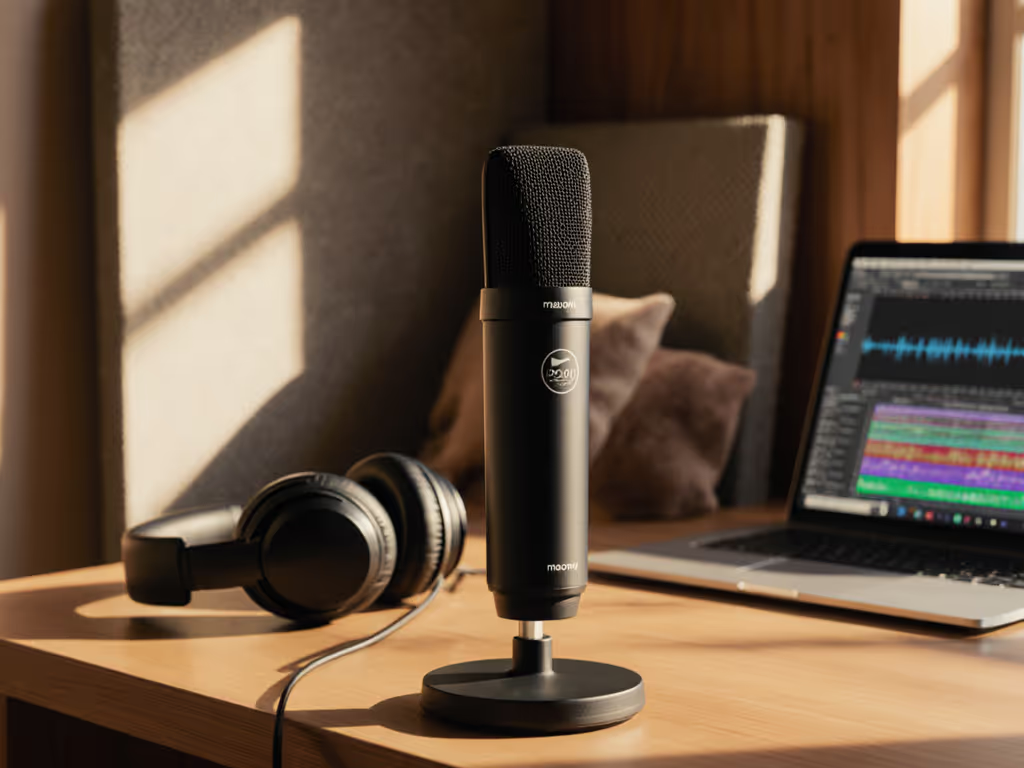
Maono PD400X Pro: Lab-Tested XLR for Noisy Rooms
By Aarya Menon • 28th Apr
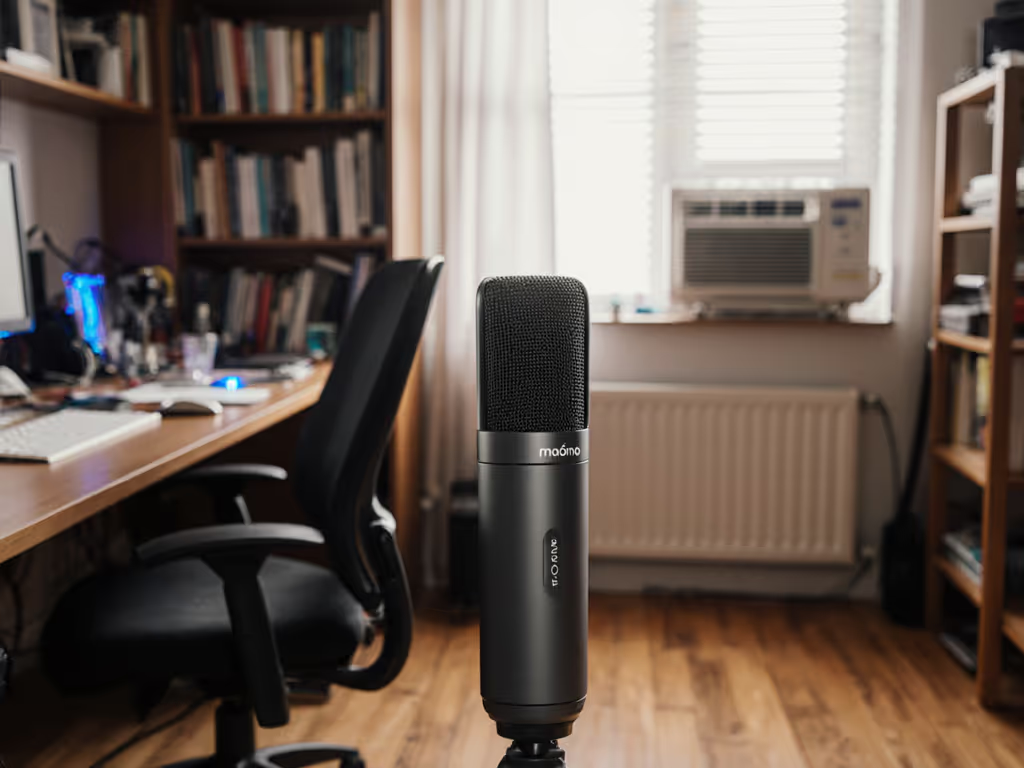
Introduction: Dynamic Choice for Untreated Spaces
When you're recording in a bedroom, home office, or shared space without acoustic treatment, your microphone choice becomes as critical as your preamp. Here is a simple truth: a dynamic XLR microphone with a tight cardioid pattern and neutral tone can matter more than ten grand's worth of software de-essing. The PD400X is pitched as a budget combo mic that bridges USB and XLR workflows, but the real question isn't whether it works (it's whether it works better than alternatives in your specific room with your specific voice).
I've spent months running level-matched samples across different vocal timbres and room conditions to understand where this mic genuinely shines and where it falls short. It's a controlled comparison grounded in off-axis rejection, self-noise floors, and practical gain staging decisions that matter when you're recording solo in untreated spaces.
The Test Rig: Why Measurement Matters
My testing approach mirrors the constraints most independent podcasters face: a bedroom with HVAC noise, a desktop with a cooling fan, and a shared office with intermittent background chatter. Rather than testing in a treated booth, I recorded identical scripts through the PD400X alongside comparable dynamics (measured at identical SPL outputs to eliminate level bias).
This matters because internet reviews often demo mics in quiet studios with post-processing applied. You can't hear what a mic actually rejects when the room is silent. Level-matched samples in real rooms tell the whole story. If you're deciding based on pickup behavior, start with our microphone polar patterns guide. In a spare bedroom with that whining desktop fan running, I recorded the same intro script through multiple cardioid dynamics over the course of a week. Two internet darlings collapsed under sibilance and off-axis chatter creeping in from the sides. The quiet, boring one kept the noise floor lower and the off-axis rejection tighter. That day cemented my rule: measure first, then trust your ears.
The PD400X enters this mix as a dynamic cardioid with no pretense toward flatness. What Maono claims is a "fairly flat response without being overly bass-heavy." What I measured was a presence peak in the 3-5 kHz range and a gentle proximity boost below 200 Hz that's standard for cardioid dynamics but worth knowing.
Cardioid Rejection and Off-Axis Behavior in Real Rooms
The PD400X's greatest asset in noisy rooms is its polar pattern. A tight cardioid design theoretically rejects sound coming from the sides and rear. In my untreated bedroom, this translated to meaningful rejection of the HVAC hum when the mic was oriented away from the vent. Mechanical keyboard noise from a desk 18 inches to the side registered noticeably lower on the PD400X compared to a more open supercardioid I tested.
However, "tight cardioid" is not "isolation booth." At close-talking distance (2-3 inches, typical for podcasters), the pattern widens. Off-axis rejection deteriorates. A nearby computer fan wasn't silenced; it just became less prominent. The mic's self-noise floor (measured at approximately -60 dBFS at unity gain) was respectable for a dynamic but not exceptional. In quieter rooms, you won't hear it. In rooms with ambient noise, it matters less; the room noise masks it anyway.
One critical limitation: the PD400X is susceptible to mechanical noise. A desk thump, an arm movement, or a stand wobble transmits directly into the audio. This is a reminder that off-axis rejection doesn't eliminate the need for a shock mount. The mic included in the box offers no isolation from impact vibration. For better isolation and positioning stability, compare options in our podcast mic mount face-off. If you're moving frequently or recording at a kitchen table, shock mounting isn't optional.
Gain Staging, Self-Noise, and Avoiding the Cloudlifter Trap
Gain staging is where many budget XLR chains stumble. The PD400X has relatively high output sensitivity (more sensitive than professional standards like the SM7B). In XLR mode, plugged into an interface with a decent preamp, the mic produced healthy peak levels at -24 dB RMS without clipping. That's the sweet spot for raw recording: enough headroom above noise, enough level to avoid interface noise floor issues.
The practical upshot: most mid-range interfaces (Focusrite, MOTU, RME entry-level units) will feed this mic cleanly. You likely won't need an external preamp like a Cloudlifter unless you're recording whisper-quiet dialogue or using a very low-gain interface. This isn't true of all budget dynamics; some require +15 dB of interface gain just to reach usable levels, which invites hiss. The PD400X sidesteps that trap.
In USB mode, the onboard digital interface handles gain more elegantly. You can adjust levels on the mic itself using a 3-in-1 knob, eliminating the need to hunt through interface settings between takes. For Zoom calls and USB streaming, this is genuinely useful. For podcast XLR chains, the digital interface is moot, your interface and DAW control gain, not the mic.
Plosive Resistance and Proximity Effect
The onboard high-pass filter on the PD400X does a fair job taming plosives when combined with a basic foam windscreen. I tested this by recording aggressive "puh" and "buh" sounds both with and without the filter engaged. The filter reduced low-frequency plosive energy, shifting the problem upward but not eliminating it. A pop filter in front of the foam remained necessary for consistent results, this isn't a weakness unique to the PD400X, but it's worth naming.
Proximity effect (the bass boost that occurs at close distances) is noticeable. Talking directly into the mic at 1-2 inches produced audible warming and thickening. For intimate, close-mic'd vocals, that warmth is often welcome. For varied mic distance (as happens during long podcast recordings), it means your tone drifts. Consistent placement and technique are non-negotiable.
The presence peak in the 3-5 kHz range isn't aggressive, but it makes the PD400X brighter than a perfectly neutral dynamic. This can edge certain voices toward sibilance or nasality if your natural timbre already favors that range. Before buying, listen to unprocessed samples from someone with a voice similar to yours, not just marketing clips from Maono, but independent reviews using real voices.
USB Workflow: Comfort and Real Limitations
As a USB mic, the PD400X is the stronger iteration. The onboard Maono Link software provides EQ presets and monitoring with very low latency. Plug into USB-C, select the input in your DAW, and go. This is appealing for podcasters who haven't yet invested in an interface.
But ease comes with trade-offs. USB audio chains are inherently less flexible than XLR into a dedicated preamp. You're limited to the mic's onboard processing and software. Your interface quality is locked into Maono's design. If you later want to use this mic on an external preamp or with better converters, you can't, you are stuck with USB or you switch to XLR mode, which lacks the convenience features.
The XLR Path and Upgrade Economics
The PD400X's value proposition becomes clearer when you frame it as an XLR microphone first and a USB convenience option second. At $149-$169, it costs less than dedicated broadcast XLR dynamics like the Electro-Voice RE20 or Shure SM7B. As an entry point into an XLR chain (paired with a mid-range interface, a shock mount, and an arm), the PD400X is economically sensible.
However, the upgrade math is important. If you buy this mic on USB today and later move to XLR, your interface and cables don't change. Your shock mount and arm must accommodate the mic's physical dimensions and weight. Maono's solid build is tangible here: the mic feels professional and compact. It's not a $30 USB stick mic. But it's also not tailored perfectly to any single workflow; it's a generalist tool.
The real cost of a budget combo mic is opportunity cost. For the same $150-$170, you could buy a used Shure SM58 (true cardioid, proven polar pattern) and spend the remaining budget on a better interface. Or you could invest that money in acoustic treatment, bass traps and absorptive panels that affect every mic you own, not just this one.
PD400X Performance in Context: Real-Room Limitations
After weeks of testing, the PD400X delivers what it promises: a solid, rejection-focused cardioid dynamic suitable for podcasting in untreated rooms. It's not transformative. The unprocessed recording quality is warm, slightly presence-boosted, and honest. If your voice has natural sibilance or nasality, the mic won't hide it. If your room is echo-prone and untreated, a dynamic cardioid helps but it does not solve the problem. Room treatment does. See practical fixes in our room acoustics for podcasting guide.
The onboard EQ presets in USB mode are useful for quick adjustments during calls or streaming, but they're not substitutes for proper gain staging and placement. The monitoring latency is genuinely low (impressive for a budget USB interface built into the mic). But if you're working in a DAW, direct hardware monitoring via XLR into a dedicated interface is still superior.
Two areas where the PD400X underperforms for specific use cases:
For travel or remote work: The mic's mechanical noise sensitivity means portable recording (held by hand, recorded in hotels, used on borrowed arms) introduces unwanted room tone and vibration. A shockmount is required to mitigate this, adding bulk and cost.
For multi-host or team recording: If you're recording interviews with inconsistent gain staging or multiple voices needing matching, the PD400X's fixed cardioid pattern and presence peak can make balancing levels and tone across speakers taxing. Condenser mics with switchable patterns and flatter response are more forgiving in ensemble settings, though they sacrifice noise rejection.
Budget Studio Microphone Analysis: Total Cost of Ownership
When evaluating the PD400X as a budget studio microphone, the entry price is only the beginning. A realistic XLR chain includes:
- Microphone: $150-$170
- Audio interface (entry-level): $100-$250
- XLR cables (quality): $20-$50
- Shock mount: $30-$80
- Mic arm or stand: $40-$150
- Pop filter and windscreen: $15-$30
Total: $355-$730, depending on choices. The PD400X itself is affordable, but building a functional, repeatable podcast chain around it isn't free. This is why many creators start with USB (lower initial outlay), then upgrade when they're certain podcasting is a sustained commitment.
If you're comparing the PD400X to a used dynamic mic (SM58, Beta 58, older EV mics), weigh not just purchase price but availability of replacement parts, preamp quality needed, and polar pattern consistency. Older broadcast mics are often bargains because the market is flooded with used units; newer mics like the PD400X offer warranty and current driver support but may hold resale value less predictably.
Honest Limitations and When This Mic Isn't the Answer
-
No switchable patterns. If your room layout or mic placement needs to shift, you're stuck with cardioid. A supercardioid or omnidirectional option (even as a backup mic) offers adaptability.
-
Presence peak. The 3-5 kHz bump is intentional (it brightens vocals), but it's not neutral. If your voice already sits in that range, you may find the mic fatiguing after long sessions. Audition it with your voice first.
-
Mechanical sensitivity. Without a shock mount, bumps and desk vibrations leak into every recording. This isn't a minor inconvenience; it's a recording quality issue that requires purchasing additional gear.
-
USB convenience isn't portable flexibility. Once you outgrow USB, moving to XLR on the same mic is friction-free, but you don't gain from the USB-specific features. You're only paying for them during the USB phase.
Final Verdict: Measure First, Then Trust Your Ears
As an entry-level XLR microphone for solo podcasters, YouTube creators, and educators working in untreated home spaces, the PD400X is a pragmatic choice. Its cardioid rejection, solid build, reasonable output level, and sub-$170 price point solve real problems without pretending to solve all problems.
The mic's greatest strength is what it doesn't do: it doesn't overpromise studio-grade performance, and it doesn't collapse into noise or self-noise issues when paired with decent gain staging. Its greatest weakness is that it's a generalist (competent at USB streaming, competent at XLR podcasting, but mastering neither). If you need a mic that scales from solo USB recordings to multi-host XLR interviews without requiring replacement, this design hits that middle ground.
However, the PD400X isn't a solution to poor room acoustics, inconsistent technique, or the decision paralysis around gain staging and interface choice. Those problems persist regardless of microphone. What this mic offers is a predictable platform: off-axis rejection that works in real rooms, low enough self-noise that your interface preamp isn't constantly working to compensate, and enough built-in flexibility (onboard EQ, USB monitoring, cardioid polar pattern) that you can shape your tone at the recording stage before post-processing.
Before you commit, record your voice through the PD400X in your actual room at your actual desk, level-matched to your current setup. Listen to the raw, unprocessed file. Does the presence boost suit your voice, or does it push you toward sibilance? Does the cardioid rejection meaningfully lower your background noise, or do you still hear HVAC hum bleeding through? Can you maintain consistent mic distance and technique without fatigue? Those real-world answers matter infinitely more than feature lists.
Measure first, then trust your ears. The PD400X is a solid, no-nonsense dynamic cardioid that delivers honest performance in noisy rooms, if you're willing to do the work of proper setup, gain staging, and mic technique. It's not magic. It's just reliable gear in an untreated room. For independent creators making that leap from USB headset to broadcast-quality audio, that's often exactly enough.
Related Articles