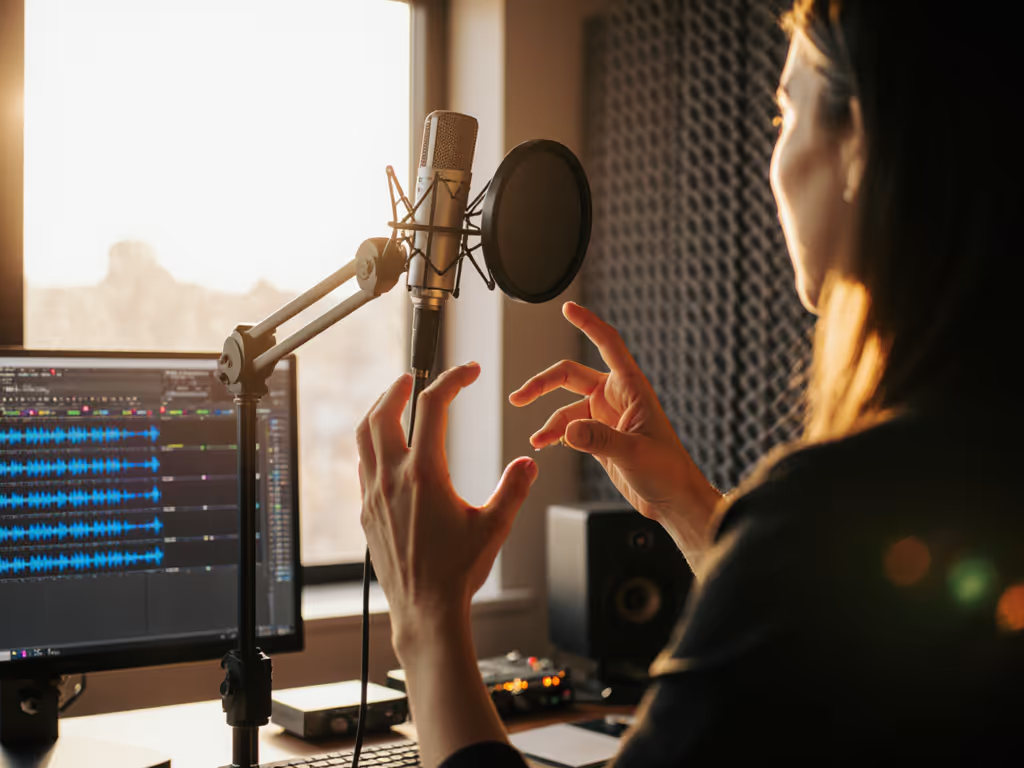
Disability-Friendly Podcast Mics: Voice Control Setup
By Jakob Steiner • 1st Nov
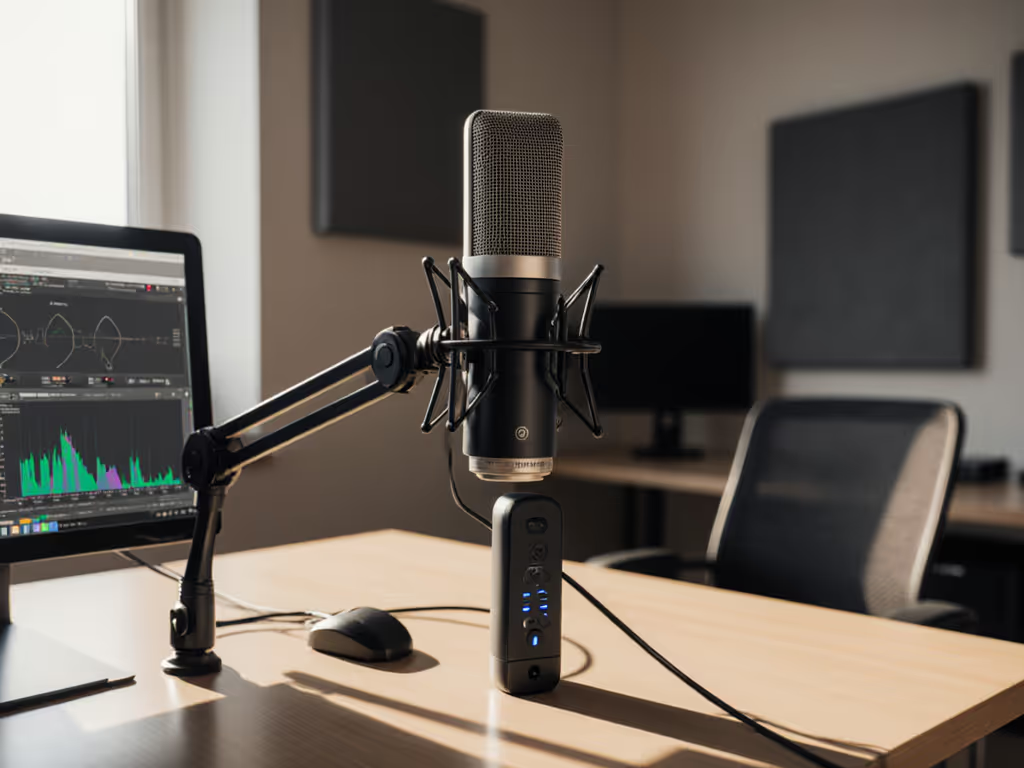
When selecting podcasting equipment for creators with mobility limitations, standard recommendations often miss the mark. True disability-friendly microphones prioritize reliable voice capture over audiophile specs, delivering crisp command recognition without taxing physical adjustments. Forget expensive chains requiring perfect posture; your voice-controlled workflow demands microphones engineered for your reality: softer articulation, limited reach, and unwavering consistency in untreated spaces. After optimizing setups for national broadcasters with vocal fatigue, I've seen creators waste months chasing "broadcast polish" while ignoring the fatal flaw: unfixable capture errors.
Why Standard Podcast Mics Fail Voice Control Workflows
Most reviews tout mics for "rich low-end" or "studio warmth," which is irrelevant for voice-controlled interfaces. For creators with compromised breath support or limited neck mobility, these become liabilities. Consider the ubiquitous Shure SM7B: its high proximity effect demands precise 6-inch placement. Lean back due to fatigue? Your voice dips 12 dB, triggering failed commands. Its noise floor (29 dB-A) drowns soft consonants under fan noise. One client using Azure Speech Services saw 40% accuracy drops when recording beyond 8 inches, even with a Cloudlifter. Standard USB mics like the Blue Yeti compound this: omnidirectional modes ingest keyboard clatter, while tight cardioid patterns require repositioning after every chair adjustment. Your voice isn't the problem; the capture chain is.
Voice control has zero tolerance for:
- Inconsistent gain staging: Ambient noise swallows soft phonemes (e.g., /s/ or /f/) if preamp headroom isn't calibrated for your vocal dynamics
- Off-axis coloration: Chair shifts or head tilts that bleed room reverb into recordings
- Plosive explosions: "P" and "B" sounds triggering false commands (e.g., "play" vs "pause")
One educator with muscular dystrophy returned three "top-rated" mics because their voice triggered "mute" 20% of the time. The culprit? Poor off-axis rejection letting desk thumps corrupt trigger words. She wasn't using the mic wrong; it was wrong for her workflow.
Three Principles for Voice-Optimized Capture Chains
Ditch spec sheets. Focus on behavioral reliability in your actual environment. Drawing from broadcast-grade setups for voice-controlled studios, prioritize:
1. Fixed Capture Point Ergonomics
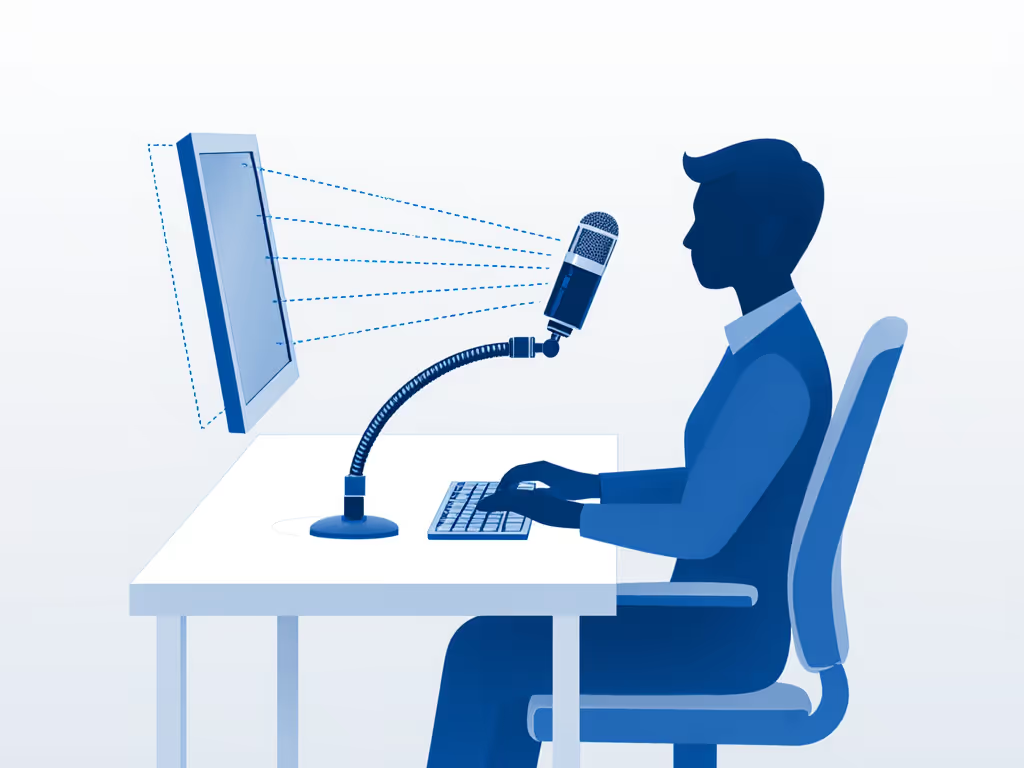
Your mic must live exactly where your voice lands, without constant adjustment. To lock in placement and reduce plosives, use our microphone positioning guide. For seated creators:
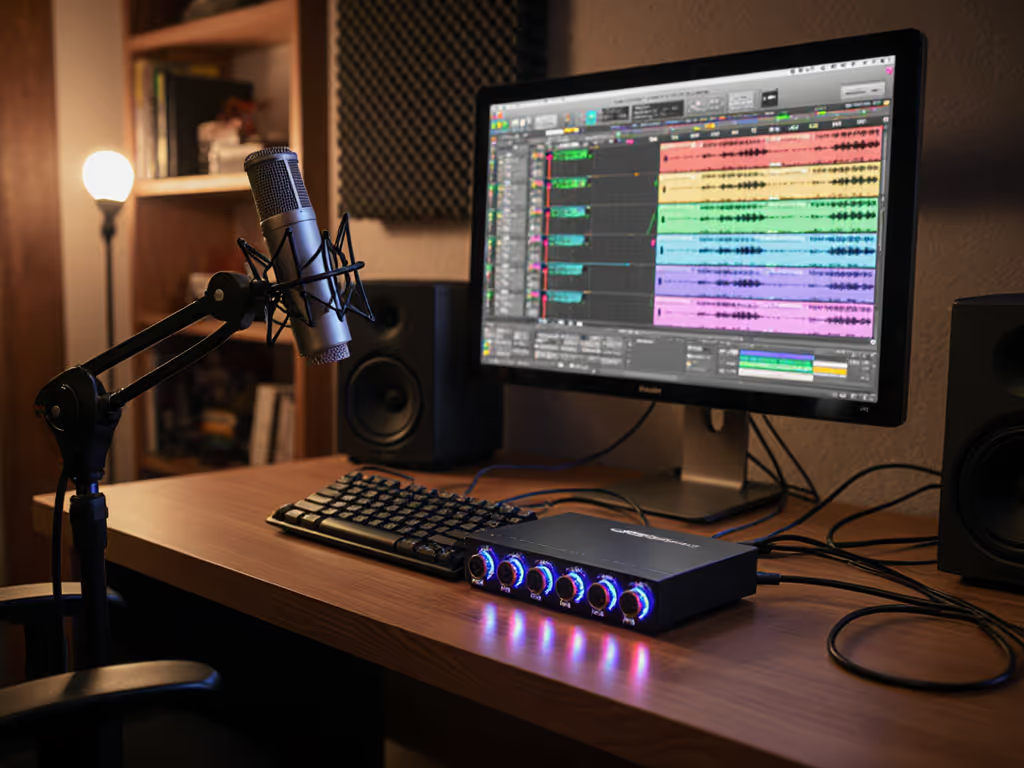
- Mount vertically (e.g., behind monitor/keyboard) to align with seated mouth height
- Use flexible booms (not rigid arms) for micro-adjustments via chin or elbow
- Eliminate reach requirements: If you can't manually tweak gain, automate it via interface software (e.g., Focusrite's Level Pilot)
A SpeechWare KeyboardMike user with limited arm mobility cut failed dictation by 85% simply by mounting it behind his keyboard (keeping the capsule 3 inches from his mouth during all postures). Capture clean, commit early, and keep sponsors breathing between words.
2. Noise Floor Discipline
Dynamic mics excel here. Their lower sensitivity (e.g., 1.8 mV/Pa vs condensers' 8 mV/Pa) ignores distant keyboard noise while capturing close speech. Crucial tradeoffs:
- ✅ RE20-style mics: Reject HVAC noise 6 ft+ away but need 60 dB+ clean gain
- ❌ Cheap condensers: Amplify chair creaks despite "tight" cardioid patterns
- ⚠️ USB converters: Latency kills real-time monitoring; demand hardware direct monitoring
3. Adaptive Polar Pattern Deployment
Don't just "use cardioid." Engineer rejection zones: Learn how each pattern shapes rejection in our microphone polar patterns guide.
- Wide cardioid for moderate chair movement (e.g., 15° off-axis tolerance)
- Hypercardioid only if background noise is directional (e.g., street noise from one window)
- Never omnidirectional. It captures 360° of command-triggering interference
One nonprofit reporter with vocal fatigue paired a Heil PR40 (hypercardioid) with strategic gobos. By placing absorptive panels behind her desk, she reduced off-axis street noise by 18 dB, making "record start" commands register consistently. Chain discipline starts before the mic.
Minimum Viable Chain, Maximum Focus
You don't need pro gear, just pro chain discipline. Build this foundation:
- Dynamic mic (e.g., RE20-patterned) with smooth presence region (2-5 kHz boost for articulation clarity)
- Interface with ≥62 dB clean gain (verify via actual noise floor measurements, not spec sheets)
- Zero-latency monitoring via interface hardware output
- Fixed-position mount (keyboard/monitor-back) eliminating reach requirements
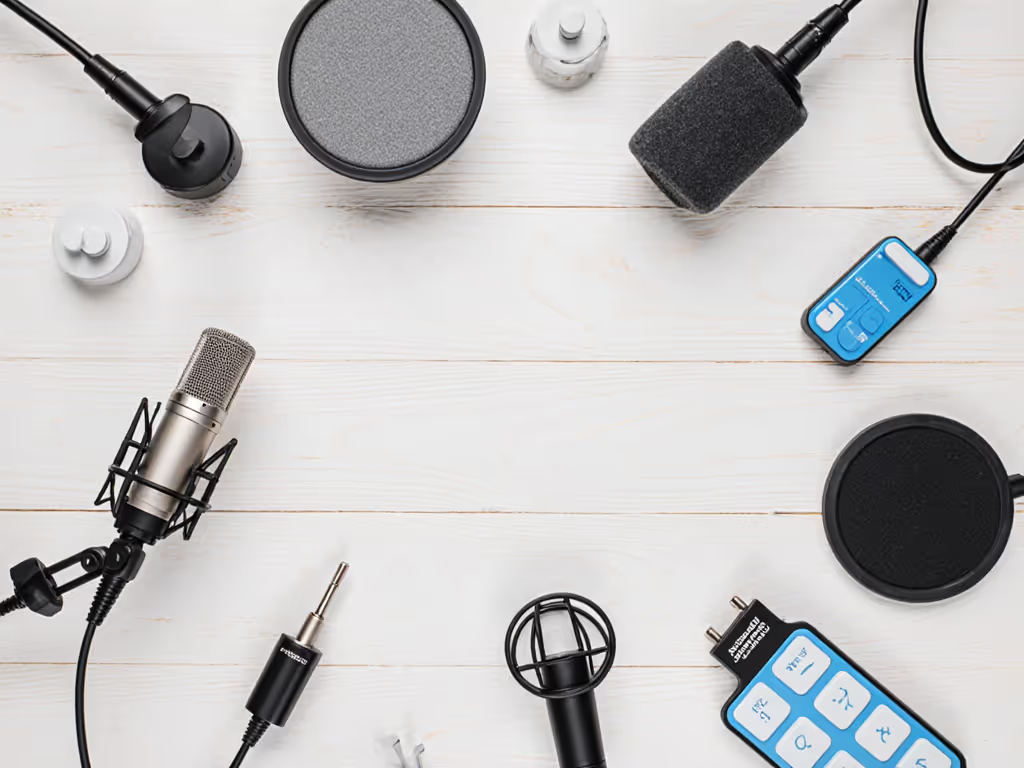
Advanced move? Add a physical gain knob (e.g., ART TubeMP) for on-the-fly adjustments without voice commands. But never sacrifice ergonomics for "premium" features. Remember my client's roundtable disaster: moving chairs and tightening patterns fixed muddy audio faster than any $500 plugin. Clean capture beats corrective processing, every time.
Your Voice Control Readiness Checklist
Audit your setup in 10 minutes: If your levels are inconsistent, follow our gain staging guide for step-by-step targets.
- 🔴 Test command accuracy at your seated position (not ideal "review" posture)
- 🔴 Measure ambient noise at mic position with a free app (e.g., Decibel X); it must be ≥20 dB below vocal peaks
- 🔴 Map rejection zones: Walk behind the desk while recording; delete if background noise exceeds -40 dB
- 🔴 Verify gain staging: Peaks should hit -12 dB on quiet phrases, -6 dB on loud phrases
Stop treating voice control as an afterthought. Disability-friendly microphones aren't niche, they are essential for creators who rely on voice as their primary interface. The right chain turns erratic commands into bulletproof workflow. I've seen it transform sessions from "surgery" to seamless assembly. Now go optimize your capture point.
Further Exploration: Study how NPR's accessibility team configures mics for voice-controlled broadcast booths, particularly their use of fixed-distance gain presets for vocal fatigue. Or analyze dB vs ARTIC index correlations in IEEE's 2024 speech recognition benchmarks. Your clarity isn't a luxury; it's infrastructure.
Related Articles