USB Podcast Mics Capturing All Language Voices
By Nora Adeyemi • 23rd Oct
Choosing the right podcast microphone is crucial for capturing the full richness of diverse voices and languages. A USB mic that excels at diverse voice capture ensures every speaker, regardless of vocal characteristics or native language, is reproduced with clarity and warmth. This guide examines options delivering consistent audio across languages while accounting for unique vocal range needs in imperfect recording environments.
What makes a USB mic suitable for multilingual podcasts?
Effective multilingual recording requires frequency response that accommodates:
- Language-specific frequency response variations (e.g., tonal languages vs. guttural sounds)
- Plosive resistance for languages with strong "p" and "b" sounds
- Off-axis rejection for dynamic conversational styles
- Minimal coloration of vocal timbre across registers
Top performers like the Rode NT-USB Mini ($99) feature precise cardioid pickup that maintains vocal integrity whether recording Japanese high-frequency consonants or Arabic emphatic consonants. Its multi-mic compatibility via Rode Connect software enables consistent tone across co-hosts speaking different languages.
Dynamic vs condenser: Best for language diversity
| Feature | Dynamic (e.g., Shure MV7) | Condenser (e.g., AKG Lyra) |
|---|---|---|
| Vocal Range | Better for deep/low voices | Excels with bright/high voices |
| Background Noise | Superior in noisy spaces | Requires treated environments |
| Nuance Capture | Good articulation | Exceptional detail |
| Room Tolerance | Forgiving in imperfect spaces | Reveals room imperfections |
The Shure MV7 ($250) stands out with its "perfect recordings in imperfect rooms" capability, handling tonal languages like Mandarin with minimal coloration while rejecting room reflections common in home studios. Not sure which capsule type fits your space and voice? Start with our dynamic vs condenser guide for untreated rooms.
Top USB Mics for Vocal Diversity
1. Shure MV7+ ($300) Hybrid USB/XLR dynamic mic with MOTIV Mix software for real-time tone adjustment between languages. Its dual-interface flexibility provides a clear upgrade path.
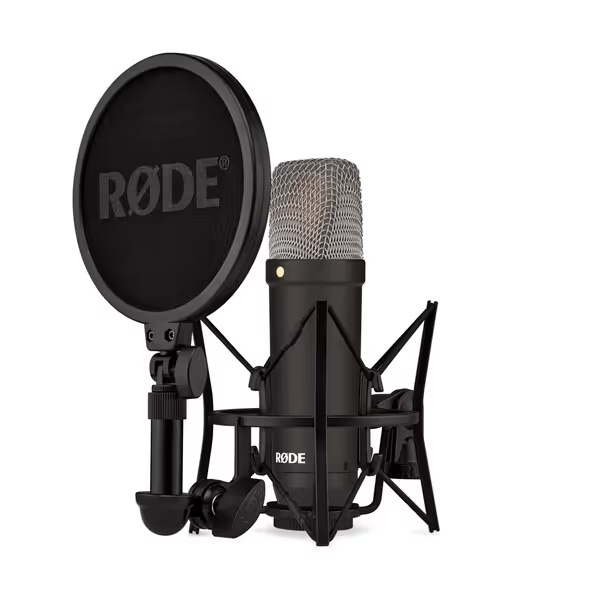
RØDE NT1 Signature Series Condenser Microphone
Achieve professional-grade audio with pristine clarity and natural vocal reproduction.
$159
Self-Noise4dBA (Extremely Low)
Self-Noise4dBA (Extremely Low)
Pros
Broadcast-ready sound with exceptional vocal clarity.
Comes with studio-grade shock mount, pop filter, and XLR cable.
Durable, premium build quality backed by a 10-year warranty.
Cons
Condenser design may pick up more room ambiance.
Customers find this microphone to be professional-grade with beautiful sound quality that makes voices sound natural, and appreciate its value for money. The microphone works well and is easy to set up...
Customers find this microphone to be professional-grade with beautiful sound quality that makes voices sound natural, and appreciate its value for money. The microphone works well and is easy to set up...
2. Samson Q2U ($80) Budget-friendly dynamic mic with dual USB/XLR connectivity excels at rejecting keyboard noise and ambient sounds during multilingual interviews. Includes monitoring headphones.
3. AKG Lyra ($90) Condenser mic offering studio-quality clarity for capturing vocal nuances in tonal languages, ideal for treated spaces. Includes versatile desk stand.
Optimizing Setup for Language Consistency
- Lock your distance: Maintain fist-width spacing (4 to 6 inches) using the "fist trick" for consistent proximity effect
- Enable direct monitoring to hear your true voice without latency
- Angle mics slightly off-axis to reduce plosives in languages with strong stops
- Match gain staging across hosts using the companion app's visual meters
- Use pop filters universally (critical for languages with explosive consonants)
"Small, repeatable wins turn scary red lights into green," as podcast mentor Nora Adeyemi emphasizes. The Rode Podcaster's ($200) integrated gain knob and zero-latency monitoring create confidence for new hosts recording multilingual content.
Future-Proofing Your Setup
For creators planning XLR upgrades, mics like the Samson Q2U allow seamless transition while preserving existing accessories. Explore our USB-XLR hybrids comparison to find flexible mics that grow with you. When moving to XLR:
- The Rode NT1 Signature Series excels for detailed linguistic capture in treated spaces
- Audio-Technica AT4040 delivers neutral reproduction for voice archetype diversity
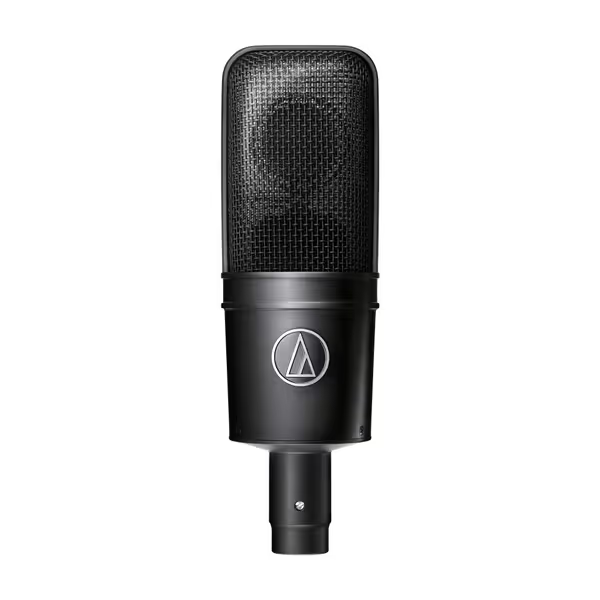
Audio-Technica AT4040
Natural, clear audio with exceptionally low noise for versatile recording.
$329
DesignLarge Diaphragm Condenser
DesignLarge Diaphragm Condenser
Pros
Captures clear, detailed sound with warm natural characteristics.
Excellent build quality ensures long-term reliability.
Low self-noise and wide dynamic range handle diverse sources.
Cons
Condenser design may pick up more room noise.
Customers find this microphone to be of very good quality, with fantastic sound and excellent clarity in recordings. They appreciate its build quality, with one customer noting it will last years, and its pick-up speed, with one mentioning it captures everything within its pattern. The microphone receives positive feedback for its voice quality and value for money, though functionality receives mixed reviews.
Customers find this microphone to be of very good quality, with fantastic sound and excellent clarity in recordings. They appreciate its build quality, with one customer noting it will last years, and its pick-up speed, with one mentioning it captures everything within its pattern. The microphone receives positive feedback for its voice quality and value for money, though functionality receives mixed reviews.
Start by testing placement with your current setup: record identical phrases at different distances while varying vocal intensity. Choose the position delivering consistent loudness and tone without post-processing. This repeatable approach ensures your podcast authentically represents every voice.
Related Articles