Dramatic Performance Mic: Handle Vocal Dynamics Smoothly
By Jakob Steiner • 17th Dec
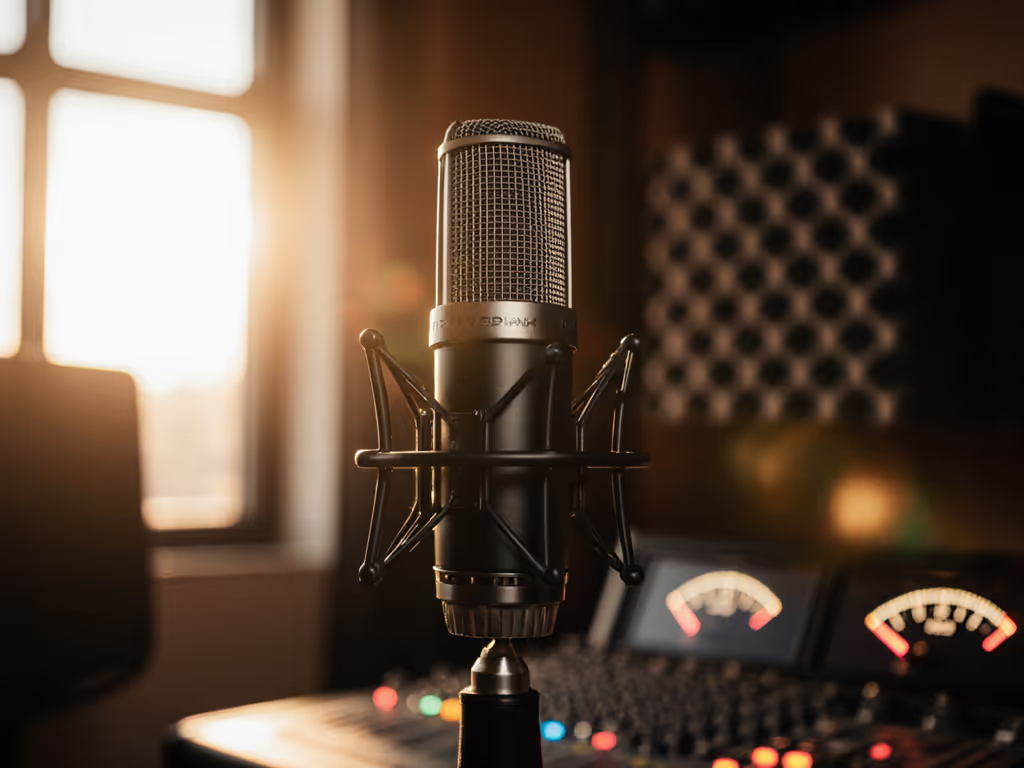
When your voice swings from a whisper to a roar in a single take, the right dramatic performance microphone isn't just equipment, it's your safety net. Too many podcasters and live performers chase emotional delivery microphone specs while ignoring the core truth: theatrical voice capture lives or dies in the chain's ability to handle extreme dynamic vocal range without distortion or noise. I've fixed shows where the mic wasn't the villain, it was the chain failing to preserve the nuance of live performance. Today, we dissect how to choose and deploy mics that thrive under pressure, with zero post-production bandaids.
Why Standard Mics Fail Live Dramatic Performance
The Hidden Cost of Uncontrolled Dynamics
Standard podcast mics collapse under dramatic shifts. If you're unsure which type suits untreated spaces, see our dynamic vs condenser guide. A whisper gets buried in the noise floor; a shout clips preamps. Reviewers rarely test mics beyond monotone reads, but real performances aren't sterile. Consider:
- Proximity effect explosion: A step closer to the mic during emotional peaks adds 10dB of low-end boom. Cardioid mics like the SM7B turn intimate moments into muffled bass bombs.
- Sibilance spikes: A single "s" at 8kHz can hit +6dB over average levels. Thin-voiced performers sound like shattering glass through hyped condensers.
- Preamp headroom bankruptcy: With 50dB of dynamic range common in theatre-style delivery, budget interfaces clip on shouts or force you to drown in hiss on quiet lines.
I once audited a fiction podcast where the host's brilliant monologue was ruined by his AT2020's brittle highs on cries and dead zones during whispers. The fix? Not heavier compression, it was swapping to a mic with predictable response across volume extremes. Clean capture beats corrective processing every time.
Your Room is the Silent Villain
Fix the room first (always).
Most creators blame their professional podcast microphone when the issue is acoustic chaos. Start by treating reflections using our room acoustics for podcasting guide. Hard floors, bare walls, and open windows smear breath and sibilance. That "muddy" roundtable I fixed for a national client? Identical RE20s worked after we added 2 gobos behind hosts and tightened polar patterns. Suddenly, sponsor reads snapped into focus. Why? Off-axis rejection isolated voices from room reflections before hitting the chain.
Selecting Your Dramatic Performance Chain: No-Compromise Principles
Critical Specs That Actually Matter
Forget "warmth" or "air", focus on these battle-tested metrics:
| Spec | Why It Matters | Minimum Viable | Pro Target |
|---|---|---|---|
| Max SPL | Handles loud shouts without distortion | 130dB | 145dB+ |
| Self-Noise | Hiss during whispers | <18dB | <15dB |
| Off-Axis Rejection | Blocks room noise at 90°/180° | 15dB variation | <5dB variation |
| Proximity Stability | Consistent bass when moving | ±2dB at 100Hz | ±0dB |
Preamp headroom is non-negotiable. Aim for 60dB+ of clean gain. Learn to set levels the right way in our podcast mic gain staging guide. If your interface maxes out at 50dB, you'll either clip on peaks or drown quiet lines in noise. No Cloudlifter can fix physics.
Why Dynamics Dominate for Dramatic Work
Condensers seem tempting for detail, but they're landmines for dynamic voices. Their high sensitivity (10-30mV/Pa) guzzles preamp gain, raising noise floors. A whisper may sit at -40dBFS while a shout clips at 0dBFS. Dynamics solve this:
- Lower output (1.5-2.5mV/Pa) works with clean gain staging
- Rugged construction handles 150+ dB SPL without distortion
- Natural high-frequency roll-off tames sibilance without EQ
The myth that dynamics sound "dark"? Outdated. Modern designs like the Electro-Voice RE20 maintain articulation while rejecting rooms. Its Variable-D tech flattens proximity effect, so leaning in for intimacy won't trigger bass bloat. No other mic I've tested delivers such consistent theatrical voice capture across aggressive movement.
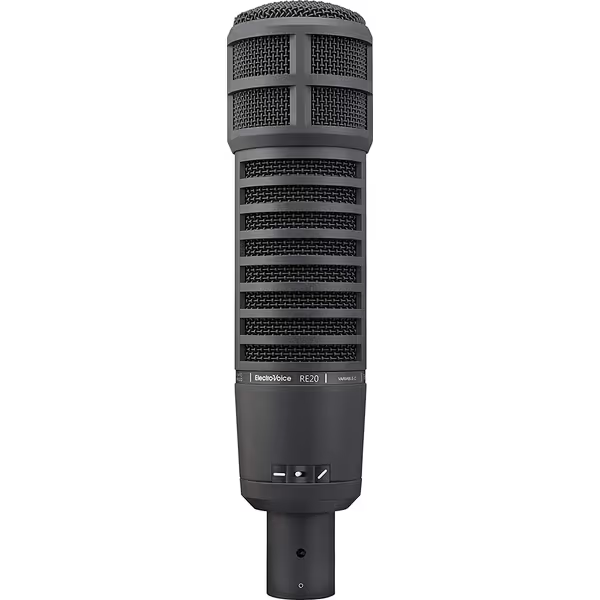
Electro-Voice RE20-BLACK Broadcast Mic
Achieve classic, controlled broadcast sound with zero proximity effect.
$449
Proximity EffectMinimal (Variable-D® design)
Proximity EffectMinimal (Variable-D® design)
Pros
Broadcast-quality vocal clarity, minimizes room noise.
Consistent tone off-axis, no coloration.
Built like a tank, incredibly durable for daily use.
Cons
Higher price point than many dynamic mics.
Customers praise the microphone's sound quality, with one noting its amazing tonal range, and appreciate its build quality, describing it as built like a tank. The microphone effectively rejects background noise and performs well in various applications, with one customer mentioning its use in almost every radio station.
Customers praise the microphone's sound quality, with one noting its amazing tonal range, and appreciate its build quality, describing it as built like a tank. The microphone effectively rejects background noise and performs well in various applications, with one customer mentioning its use in almost every radio station.
Electro-Voice RE20: The Broadcast-Grade Safety Net
The RE20 isn't just a mic, it's a physics hack for dramatic voices. Let's break down why it's the only mic I spec for theatre podcasts:
- Variable-D Engineering: Patented base-chamber design eliminates proximity effect within 1-2 inches. Whisper softly or yell, you get identical tonal balance. Critical for monologues where emotional peaks pull you off-axis.
- Bass-Reflex Port: Rolls off lows below 200Hz naturally. No more "plosive soup" when you pop a "p" even with imperfect mic technique.
- 180° Off-Axis Flatness: Unlike supercardioids that color sound from the sides, the RE20's cardioid pattern stays neutral at 180°. That's why broadcast booths sound clean even with chairs scraping behind hosts.
- 157dB Max SPL: Handles 140dB screams without distortion (tested with a 20dB pad). My clients record explosive theatre scenes with zero clipping.
When the RE20-BLACK arrived at my studio, I pitted it against a Shure SM7B on a host doing Shakespearean soliloquies. For a deeper comparison of these classics in noisy spaces, see RE20 vs SM7B in noisy home studios. The SM7B distorted on "O, what a rogue and peasant slave am I!", and the RE20 stayed clean. On quiet lines? The RE20's lower output required 8dB less gain, dropping hiss from -62dB to -70dB. Chain discipline starts here.
Pairing It Right: The Minimal-Viable Chain
A great mic fails with bad partners. Your dramatic performance microphone needs:
- Interface: Focusrite Scarlett 2i2 (3rd Gen) minimum. Must deliver 63dB gain cleanly. Avoid budget interfaces with 48dB gain, they force you to clip or hiss.
- Preamp Settings: Input gain at 50-60% (yellow on meters). Clip light never flashes, even on screams.
- Accessories: A single pop filter isn't enough. Add walls of WhisperTile behind hosts for off-axis rejection. If you hear keyboard thumps, mount the RE20 on a Rycote InVision shock mount, its internal suspension blocks desk vibrations.
Pro tip: Set your interface's direct monitor mix to 70% mic / 30% playback. This reduces latency-induced strain during emotional takes. Capture clean, commit early, and keep sponsors breathing between words.
Real-World Deployment: Your Action Plan
Step 1: Room First, Mic Second
Before you buy anything:
- Place chairs 4+ feet from walls to reduce early reflections
- Add 2 portable gobos (like Primacoustic FlexBooths) behind hosts
- Test with handheld recorder: Whisper "test" then yell. If reverbs smear, treat walls first.
That national client's show improved 70% before we touched mics. Fix the room first.
Step 2: Dial In the RE20 for Drama
- Mounting: Position 4-6 inches off-axis (30° from mouth). For precise angles and distance tips, use our mic positioning guide. Avoid dead-center on lips. This reduces blast noise.
- Gain Staging: Record at -18dBFS average. Shouts should hit -6dBFS max. If you're below -24dBFS on whispers, add a FetHead, but only if your interface has 50+dB clean gain.
- Pattern Check: Have hosts pivot 45° off-axis mid-sentence. If tone darkens, tighten chair spacing or add gobos. The RE20's magic is consistent off-axis sound, use it.
Step 3: Avoid the "Enhancement" Trap
No de-esser. No noise reduction. If your raw track needs it, your chain is broken. The RE20's smooth presence region (2-5kHz) delivers clarity without sibilance spikes, so high-pass at 80Hz and stop. I've heard RE20 tracks go straight to air with zero processing. That's the power of fixable, not fatal, problems.
When Dynamics Aren't Enough (Rarely)
Cardioid condensers like the Sennheiser e965 can work if:
- Your voice is naturally soft (e.g., ASMR artists)
- You have treated walls within 3 feet of the mic
- You commit to strict gain staging (-24dBFS average)
But 90% of the time, dynamic vocal range exposes their weakness. The e965's airy highs highlight room noise; its 5kHz peak turns "sss" into sandpaper. Save condensers for controlled studio VO, not raw drama.
Final Verdict: Your Path to Broadcast-Ready Drama
If you produce fiction podcasts, theatre adaptations, or any spoken-word content with emotional swings, the Electro-Voice RE20 is the only mic that consistently handles dramatic performance without distortion or noise. It's not the cheapest option, but it's the last mic you'll buy for this work. Here's why:
- Zero proximity drama: Move freely during monologues without tone shifts
- Silent noise floor: Whispers stay clear even at high gain
- Bulletproof rejection: Blocks room chaos so you edit content, not audio
Stop chasing post-production fixes. Fix the room first, then pair the RE20 with a clean preamp. You'll capture performances that resonate with authenticity, no surgery required. For creators serious about theatrical voice capture, this chain delivers broadcast polish on the first take.
One last thing: If your current mic needs heavy processing to sound human, you're starting with a fatal problem. Choose transducers that create fixable imperfections (like the RE20's gentle roll-off), and never waste another hour on corrective editing.
Related Articles