Best Mics for Breathy Vocals: Capture Nuance Without Hiss
By Nora Adeyemi • 5th Dec
As a podcast starter mentor who's helped dozens of first-time hosts get comfortable behind the mic, I hear one question again and again: 'Why do my breathy vocals sound so thin and noisy?' If you're searching for the best mics for vocal fry or trying to perfect your breathy voice recording setup, you're not alone. Many creators with softer, more intimate vocal styles struggle with standard mic recommendations that leave them with excessive hiss or a loss of subtle vocal nuance capture. The truth is, breathy voices contain beautiful texture and personality, and your microphone shouldn't strip that away or drown it in noise. Let's solve this together with practical solutions that work in real rooms.
Why Breathy Voices Challenge Standard Mics
Why does my breathy voice sound hissy or thin, even with 'good' mics?
Breathy voices naturally emphasize higher frequencies where most microphone self-noise lives. When you hear vocal fry or those delicate breathy textures, you're hearing air hitting the vocal folds, a subtle sound that gets lost if your mic has high self-noise or overemphasizes sibilance. Most "top podcast mic" lists recommend bright condensers that actually exaggerate the very hiss you're trying to avoid. I watched a host recently clutch her mic like an ice cream cone, peaking on every laugh while her beautiful breathy texture vanished into static.
What microphone characteristics actually help with breathy voices?
For breathy voice recording, you need:
- Lower self-noise (under 15dB) to avoid competing with your quiet breath sounds
- Slightly rolled-off high frequencies to tame harshness without losing clarity
- Excellent off-axis rejection to minimize room noise that competes with subtle vocal textures
- Appropriate sensitivity (not too hot, not too weak) to maintain dynamics without excessive gain
Dynamic mics often outperform condensers here, not because they are "better," but because their natural high-frequency roll-off complements breathy voices. The right dynamic mic won't make your voice "sound distant"; it will preserve intimacy while reducing noise floor issues common with breathy delivery.
Should I use a dynamic or condenser mic for breathy vocals?
For most untreated rooms and breathy voices, dynamic mics are the smarter starting point. Here's why:
- Condensers pick up everything (including your HVAC, keyboard clicks, and room reverb that competes with subtle vocal nuance capture)
- Their brighter high-end emphasizes sibilance and breath noise you don't want
- Most need more gain (introducing hiss) to achieve usable levels for quieter voices
Dynamics like the Audio-Technica AT2040 naturally reject background noise while capturing smooth, warm vocal texture reproduction. They're less fussy about placement and more forgiving in imperfect rooms (critical when you're working with breathy delivery where every whisper matters).
How should I position my mic for breathy vocals?
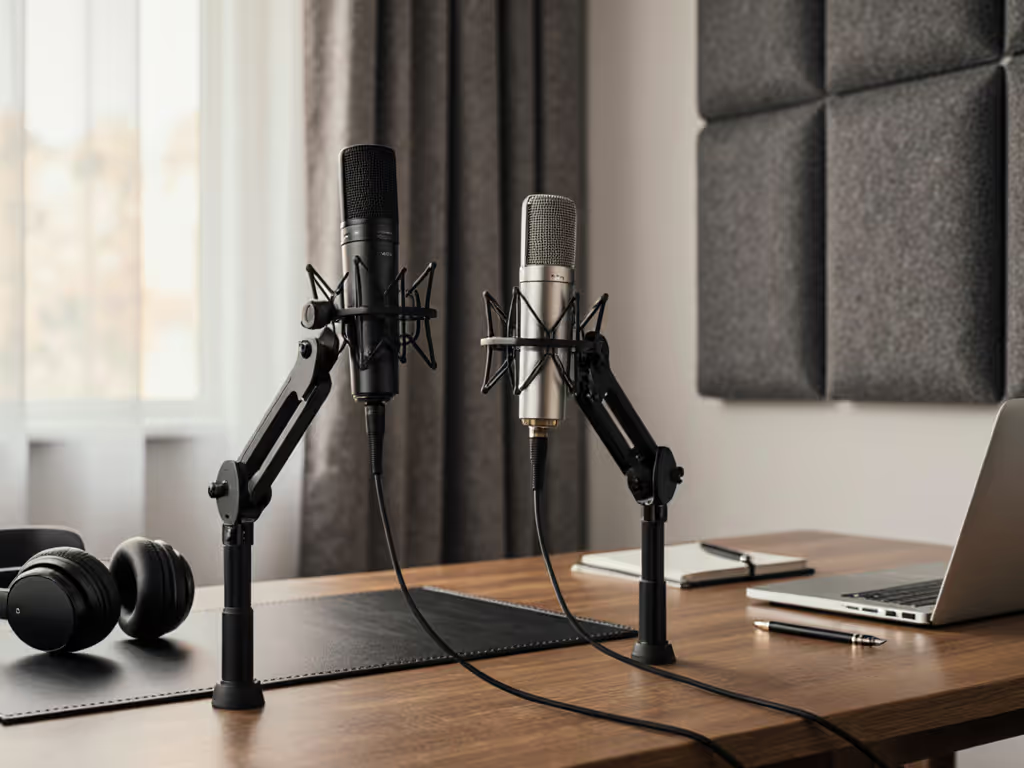
With breathy voices, placement is everything. For step-by-step placement tips that tame plosives and sibilance without killing breathiness, see our microphone positioning guide. Here's what I teach all my beginners:
- Angle slightly off-axis (about 15-30 degrees) to prevent direct blasts of air hitting the capsule while maintaining presence
- Maintain fist-width distance (your closed fist between mouth and mic) to control proximity effect while capturing airiness without excessive breath noise
- Use a pop filter but not right against your mouth, and space it 3-4 inches from your lips to diffuse air without deadening vocal texture
- Position mic at mouth corner level, not directly in front, to catch voice with less breath turbulence
Breathy voices often require less pop filter than louder voices, but the filter still tames sudden plosives that can overwhelm delicate dynamics. Small, repeatable wins turn scary red lights into green.
Which budget-friendly mics actually work for breathy voices?
After testing dozens of mics with real podcasters, I recommend these breathy-voice-friendly options that deliver professional results without demanding professional budgets:
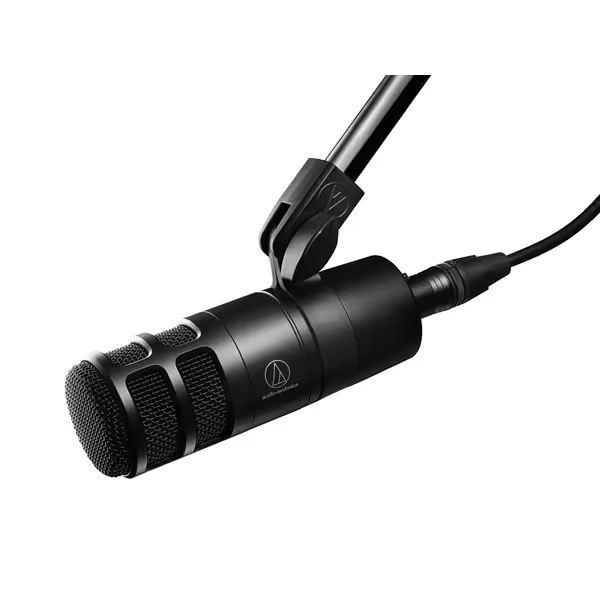
Audio Technica AT2040
Broadcast-quality sound with excellent room noise and plosive rejection.
$109
Polar PatternHypercardioid
Polar PatternHypercardioid
Pros
Minimizes room noise and off-axis sounds effectively.
Integrated pop filter & shock mount for cleaner audio.
Delivers warm, authoritative broadcast vocal tone.
Cons
Audio quality receives mixed feedback from some users.
Sounds just as good for half the price; great for gaming/streaming, good noise rejection.
Sounds just as good for half the price; great for gaming/streaming, good noise rejection.
The Audio-Technica AT2040 is my top recommendation for creators starting out with breathy voices. Unlike brighter condensers, its dynamic capsule delivers smooth, natural sound with less high-end harshness (perfect for preserving vocal fry without extra hiss). The built-in multistage windscreen handles breath noise better than most external pop filters, and its hypercardioid pattern rejects room noise that would compete with your subtle vocal textures. At under $110, it's the most affordable mic on this list that genuinely delivers broadcast-quality breathy voice recording without needing post-processing magic.
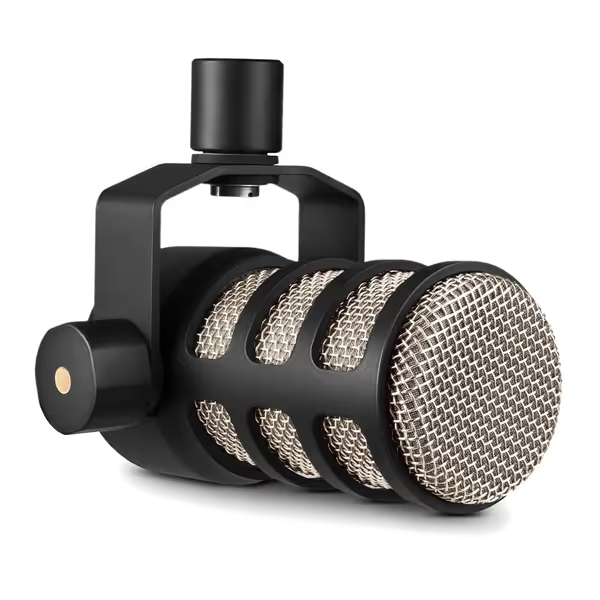
Rode PodMic Cardioid Dynamic Broadcast Microphone
Broadcast-quality dynamic microphone for rich, balanced podcast audio.
$99
Microphone TypeDynamic
Microphone TypeDynamic
Pros
Internal pop filter and shock mount reduce plosives & vibrations.
Optimized for podcasting; delivers rich, balanced, professional sound.
Solid build quality and sleek design add professional aesthetic.
Cons
Feedback divided on weight, background noise rejection, and long-term functionality.
Customers find the microphone to be a great step up in quality, with crystal clear sound that can be completely customized with software. The build quality is solid, and customers appreciate its sleek black metal body and good value for money. The functionality receives mixed feedback - while some say it functions beautifully, others report it stops working entirely. Customers disagree on the microphone's weight, with some finding it super heavy while others consider it lighter. The microphone handles background noise well according to some customers, though others report it picks up too much background noise.
Customers find the microphone to be a great step up in quality, with crystal clear sound that can be completely customized with software. The build quality is solid, and customers appreciate its sleek black metal body and good value for money. The functionality receives mixed feedback - while some say it functions beautifully, others report it stops working entirely. Customers disagree on the microphone's weight, with some finding it super heavy while others consider it lighter. The microphone handles background noise well according to some customers, though others report it picks up too much background noise.
The Rode PodMic offers exceptional value for breathy voices under $100. Its tailored frequency response naturally rolls off extreme highs while preserving midrange intimacy, exactly what you need for vocal texture reproduction. I've seen creators with whisper-soft voices achieve clean, present recordings where other mics required excessive gain. The internal pop filter effectively manages breath blasts without deadening your natural tone. Best for desktop setups where room noise is moderate.
Can I get good breathy vocal recordings in an untreated room?
Absolutely, but room choice matters more than most reviews admit. For breathy voices, follow these rules:
- Record in the smallest room possible (less space = less reverb competing with your delicate tones)
- Cover hard surfaces, for example, a blanket over your desk or a rug on hardwood to prevent harsh reflections
- Position yourself facing a soft surface (like a bookshelf or curtains) to absorb rear reflections
- Turn off HVAC/fans during recording because breathy voices are most vulnerable to ambient noise
Your microphone frequency response interacts with room acoustics. For a deeper dive into taming reflections and reverb, see our room acoustics for podcasting guide. Dynamics like the Electro-Voice RE20 handle untreated spaces better because they reject off-axis sound naturally. No amount of post-processing can fix a noisy room competing with subtle vocal nuance capture.
How do I set gain properly for breathy voices?
This is where most creators go wrong with breathy voices. Dial levels the right way with our podcast mic gain staging guide. Instead of cranking the gain knob until you see waveform movement:
- Speak in your natural breathy tone (not louder than normal)
- Set gain until your loudest words hit -12dB on your meter
- Use direct monitoring to hear yourself without latency, critical for maintaining consistent delivery
- Test with actual breathy phrases, not just speaking loudly
Too much gain introduces noise that swallows delicate breath sounds. Too little gain forces destructive boosting in editing. Your voice has natural dynamics, and your gain staging should honor them, not fight them.
Your Action Plan for Breathy Voice Recording
Try this breathy-voice-friendly setup checklist:
- Mic Selection: Start with a dynamic like the AT2040, more forgiving for breathy voices
- Room Choice: Smallest room available with soft surfaces near your recording position
- Placement: Fist-width distance, angled slightly off-axis, pop filter positioned correctly
- Gain Staging: -12dB peak with direct monitoring enabled
- Technique: Record relaxed (tension kills breathiness) and aim for natural delivery, not "big" sound
We're aiming for repeatable results where your first take sounds broadcast-ready. The right mic setup for breathy voices shouldn't require editing wizardry, just consistent, thoughtful placement that honors your natural tone.
Next Step: Your 24-Hour Test
If you're currently struggling with breathy voice recording, try this tomorrow:
- Position your mic at fist-width distance, angled slightly off-axis
- Record 30 seconds of natural conversation (not reading) with your current setup
- Now move the mic 3 inches farther away and repeat
- Compare the two takes: listen specifically for:
- Which version has less background noise competing with your voice?
- Where does your vocal texture reproduction sound more natural?
- Which requires less gain to achieve usable levels?
Most breathy-voiced creators discover their mic was too close (exaggerating breath noise while reducing natural warmth). Small, repeatable wins turn scary red lights into green. When that host I mentioned finally stopped clutching her mic like an ice cream cone and trusted the process, her breathy delivery became her signature strength, not something she had to fix in editing. You deserve that same confidence with your voice. Start with a solid, repeatable setup that works for your voice in your room, and you'll hear the difference before you even open your editing software.
Related Articles